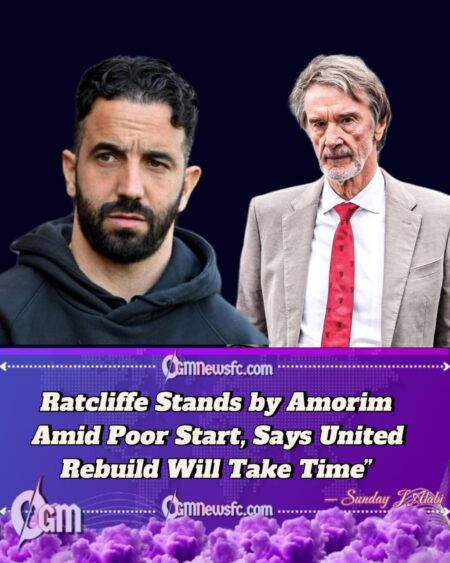
Manchester United co-owner Sir Jim Ratcliffe has urged for patience with manager Ruben Amorim, asserting that the Portuguese coach needs a full three years to demonstrate his true capability at Old Trafford. Ratcliffe’s comments come despite mounting pressure following United’s dismal performances since Amorim’s arrival from Sporting CP last November.
The Red Devils endured a historically poor campaign last season, finishing 15th in the Premier League — their lowest position since the relegation season of 1973–74. With over £200 million spent in the summer transfer window, expectations were high. However, United have already suffered three league defeats and were knocked out of the EFL Cup by League Two side Grimsby Town, intensifying criticism of Amorim’s tactics and leadership.
Speaking on The Business Podcast by The Times, Ratcliffe dismissed the notion that Amorim’s job was ever under threat after United’s 2–0 victory over Sunderland last weekend. “He has not had the best of seasons,” Ratcliffe admitted. “Ruben needs to demonstrate he is a great coach over three years. That’s where I would be.”
Standing Firm Against Media Pressure
Ratcliffe took aim at the media’s tendency to demand “overnight success,” arguing that Manchester United’s rebuilding process cannot be dictated by short-term expectations. He criticised what he described as “knee-jerk reactions” from journalists and fans, emphasizing that genuine progress at an elite football club requires time and structural stability.
“The press, sometimes I don’t understand,” he said. “They want overnight success. They think it’s a light switch. You flick a switch and it’s all going to be roses tomorrow. You can’t run a club like Manchester United on knee-jerk reactions to some journalist who goes off on one every week.”
Amorim, 40, has faced criticism for his unwavering commitment to a 3-4-2-1 formation — a tactical system that some pundits believe does not suit United’s squad. Ratcliffe, however, dismissed the external noise, calling Amorim a “good guy” and expressing confidence in his long-term vision.
Ratcliffe Shared Control and the Glazers’ Role
While Ratcliffe owns just under 30% of Manchester United, his influence extends over all football-related operations. The Glazer family, who maintain majority ownership following their controversial 2005 leveraged buyout, still play a key role on the business side but have given Ratcliffe autonomy over sporting matters.
Ratcliffe acknowledged the Glazers’ unpopularity among supporters but defended their intentions. “The Glazers get a bad rap,” he said. “They are passionate about the club.” When asked if they might pressure him to dismiss Amorim, Ratcliffe was unequivocal: “That’s not going to happen.”
This clear division of authority suggests that Ratcliffe’s sporting vision — which prioritizes long-term rebuilding and fiscal responsibility — will shape United’s future direction more than fan sentiment or external pressure.
Restructuring Old Trafford: Cuts, Costs, and Controversy
In addition to footballing decisions, Ratcliffe has overseen sweeping changes to Manchester United’s business operations, resulting in both cost reductions and criticism. The club recently announced a significant cut in annual losses from £113.2 million to £33 million for the year ending June 2025. However, this improvement came after two rounds of redundancies, with over 400 staff members — including long-serving employees — losing their jobs.
Departments such as scouting were heavily affected, while perks like free staff lunches were scrapped. Defending these measures, Ratcliffe said, “The costs were just too high. There are some fantastic people at Manchester United but there was also a level of mediocrity and it had become bloated. I got a lot of flak for the free lunches, but no-one’s ever given me a free lunch.”
The Ineos billionaire maintained that streamlining operations was essential to building a more efficient and competitive organization. “There are two halves to a football team — the business side and the sports side. The biggest correlation, like it or not, between results and any external factor, is profitability,” he noted.
The Pursuit of Profitability and Footballing Excellence
Ratcliffe’s broader ambition is to make Manchester United the most profitable football club in the world. He believes that financial success will serve as the foundation for sustainable sporting excellence. “If you look at our results for last year, we have the highest revenues ever. Profitability, the second highest ever. Those numbers will get better,” he said confidently.
He stressed that financial discipline and long-term investment are essential for restoring the club’s footballing dominance. “The more cash you have got, the better squad you can build,” Ratcliffe added. “Manchester United will become the most profitable football club in the world, in my view, and from that will stem, I hope, a long-term, sustainable, high level of football.”
As Ratcliffe continues to reshape the culture and structure at Old Trafford, his backing of Ruben Amorim signals a commitment to patience and continuity — a rare stance in modern football. Whether this three-year vision will yield the results fans crave remains to be seen, but for now, the message from United’s leadership is clear: the project will take time.