









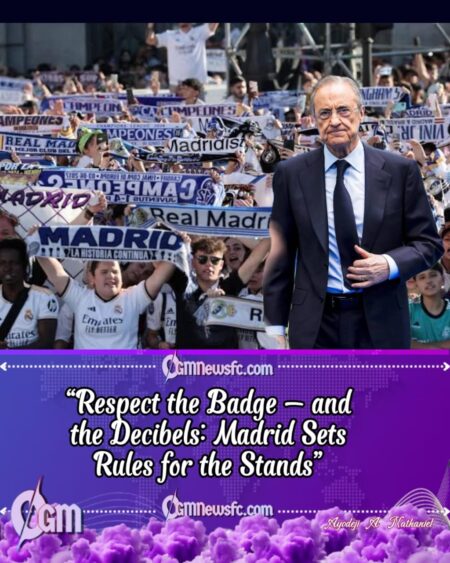
Real Madrid do many things with authority, confidence, and an air of inevitability. Asking their own fans to behave nicely is not usually one of them. Yet ahead of the home clash against Levante, club officials have made a direct appeal to the Grada supporters: applaud the players, cheer them on, and keep the boos holstered.
The message, delivered firmly but diplomatically, reflects a growing concern inside the club that unrest in the stands could spill onto the pitch. Real Madrid’s leadership believes the team needs encouragement, not a live soundtrack of dissatisfaction, as the season enters a sensitive phase.
Why the Bernabéu Has Been Restless
The mood around the Bernabéu has been strained by recent disappointments. High expectations, as ever, collided with performances that failed to inspire, and patience—never abundant in Real Madrid—has worn thin. Whistles and murmurs have crept into home games, an unmistakable sign that the crowd is unhappy.
For Real Madrid, this is more than background noise. The club prides itself on the Bernabéu being a fortress, not a courtroom. When the stadium turns critical, it can weigh heavily on players already under pressure to deliver perfection every weekend.
The Grada de Animación Under the Spotlight
The request was aimed particularly at the Grada de Animación, the organised supporters’ section responsible for much of the stadium’s atmosphere. Traditionally, the Grada sets the emotional tone—singing, chanting, and driving momentum when Madrid needs a lift.
Recently, however, that same passion has veered toward protest. The club’s intervention is a reminder that while criticism is part of football, orchestrated negativity from the heart of the stadium can undermine the very team fans want to see improve.
The Season Ticket Clause That Raised Eyebrows
Perhaps the most eyebrow-raising part of the directive was the suggestion that fans who feel unable to suppress their anger should consider transferring their season tickets—at least for this match. In short: if you plan to boo, maybe let someone else clap.
It is an unusually blunt stance for a club that often embraces the intensity of its supporters. Critics may see it as heavy-handed, while others interpret it as pragmatic. Either way, it sends a clear signal that Real Madrid are prioritising unity over catharsis.
Players, Pressure, and the Psychology of Applause
From the club’s perspective, the reasoning is simple. Players perform better when backed, not battered. Applause boosts confidence; boos amplify doubt. In tight matches, that psychological edge can decide whether a half-chance becomes a goal or a sigh.
Real Madrid’s hierarchy believes that against Levante—a fixture where dominance is expected—early encouragement could be the difference between a routine win and a nervous afternoon that invites further criticism.
A Delicate Balance Between Passion and Protest
Football thrives on emotion, and Madridismo has never been shy. The challenge for the club now is managing that emotion without extinguishing it. Fans argue that criticism is earned when standards drop; the club counters that support should come first, accountability later.
This episode highlights a broader tension in modern football: clubs want loyal, vocal supporters—but preferably vocal in a way that aligns with institutional goals. Whether the Bernabéu listens remains to be seen.
Levante Matchday: Applause Test Pending
All eyes will be on the stands when Real Madrid takes the field. Will the Bernabéu comply and turn the volume toward encouragement? Or will frustration find its way through anyway, politely or otherwise?
One thing is certain: this will be a match where the crowd’s reaction matters almost as much as the result. For once, Real Madrid are not just asking for three points—they are asking for good manners.