







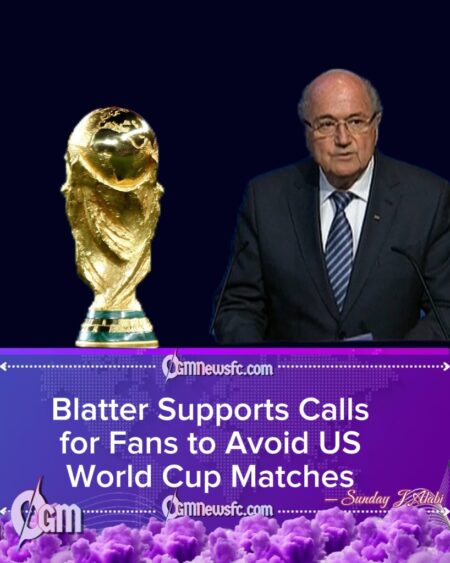
Former FIFA president Sepp Blatter has publicly questioned the safety and political climate surrounding the upcoming World Cup matches in the United States, lending his voice to growing calls for fans to avoid travelling to the country during the tournament.
Blatter’s Intervention Rekindles Debate Over World Cup Safety
Former FIFA president Sepp Blatter has suggested that football fans should reconsider travelling to the United States for the forthcoming World Cup, citing rising security and human rights concerns. His comments, made on Monday via social media, align with calls for a fan boycott of matches to be hosted on US soil during the tournament scheduled for June and July this year.
Blatter expressed support for remarks made by Swiss anti-corruption lawyer Mark Pieth, who previously worked with FIFA on governance reforms during Blatter’s presidency. Pieth had advised supporters to stay away from the United States, arguing that recent domestic developments raise serious questions about the safety of visiting fans.
According to Blatter, the concerns highlighted by Pieth are legitimate and deserving of international attention. By backing the boycott call, Blatter has re-entered the global football conversation years after stepping down from office, once again influencing debate around the governance and hosting standards of major tournaments.
The World Cup will be jointly hosted by the United States, Canada, and Mexico from 11 June to 19 July, with the US expected to stage the majority of matches. While organisers have repeatedly assured fans of comprehensive security plans, recent events have intensified scrutiny.
Blatter’s intervention adds a high-profile voice to a discussion that extends beyond football, touching on broader issues of civil liberties, law enforcement conduct, and the responsibilities of host nations.
Incidents and Political Climate Fuel Fan Anxiety
Central to Pieth’s warning are recent fatal incidents involving US immigration authorities, which he believes highlight systemic issues that could affect foreign visitors. He referenced the killing of protester Renee Good earlier this month in Minneapolis by an immigration agent as a key example that should give fans pause.
These concerns were further amplified following the death of another US citizen, Alex Pretti, reported last weekend. The two incidents have contributed to fears about the use of force by authorities and the potential risks faced by large crowds and international visitors during the tournament.
In an interview with Swiss newspaper Tages-Anzeiger, Pieth argued that the current political and social climate in the United States is unwelcoming. He cited what he described as the marginalisation of political opponents and alleged abuses by immigration services as factors undermining confidence in the host nation.
Pieth went as far as advising fans that watching matches on television would be safer and more comfortable. He warned that visitors could face strict treatment by authorities and possible deportation if they run into problems, adding to anxieties about travel and attendance.
While US officials have not directly responded to Pieth or Blatter’s remarks, tournament organisers continue to emphasise that security preparations are robust and that millions of fans are expected to attend without incident.
FIFA Leadership, Past Scandals, and Ongoing Power Struggles
Blatter’s comments also revive attention on FIFA’s leadership and its relationship with global political figures. Since replacing Blatter in 2016, current FIFA president Gianni Infantino has developed close ties with former US president Donald Trump, a relationship that has drawn both support and criticism within football circles.
Blatter himself stepped down in 2015 amid a series of corruption scandals that rocked FIFA. However, he and former UEFA president Michel Platini were definitively acquitted last year over charges linked to a delayed payment of 2 million Swiss francs made to Platini in 2011 for consultancy work.
Despite his exit from football administration, Blatter has remained outspoken on governance and ethics in the sport. His latest remarks suggest lingering concerns about how political considerations intersect with football’s global showcase events.
Former France captain Michel Platini has also weighed in recently, accusing Infantino of becoming increasingly autocratic and favouring powerful political and economic elites. These criticisms reflect ongoing tensions within world football about transparency, accountability, and leadership style.
As the World Cup approaches, the debate sparked by Blatter and Pieth underscores how off-field issues can shape perceptions of the game’s biggest tournament, potentially influencing fan behaviour and international discourse