







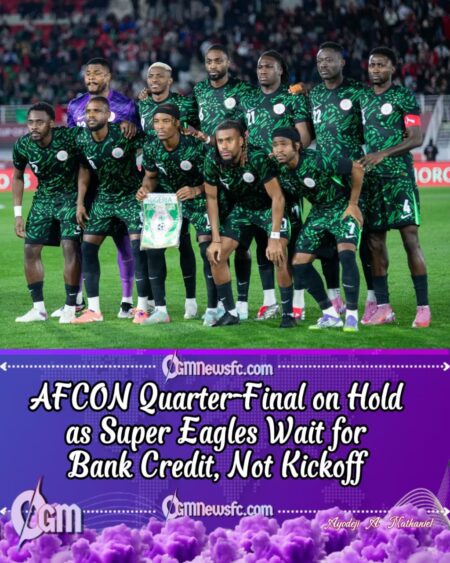
Super Eagles preparations for their Africa Cup of Nations quarter-final against Algeria have been plunged into chaos after the players collectively refused to travel to Marrakech over unpaid bonuses. What should have been a routine logistical move turned into a full-scale standoff, with the squad reportedly remaining in camp until outstanding payments are settled by the Nigeria Football Federation (NFF).
The decision was not taken lightly. Sources close to the camp say the players feel they have exhausted all internal channels and were left with no option but to halt preparations. In a tournament defined by tight schedules, the refusal to travel has immediately raised fears of a possible forfeit.
Why the Bonuses Matter to the Super Eagles
At the heart of the dispute are winning bonuses accrued during Nigeria’s AFCON campaign. These payments, tied to victories already recorded, are contractual obligations rather than optional rewards. For the Super Eagles, the issue is about respect and professionalism as much as it is about money.
Players believe allowing the situation to slide would reinforce a long-standing pattern in Nigerian football—perform first, negotiate later. This time, the Super Eagles have chosen to assert their rights while they still hold leverage, even if it risks short-term turbulence.
Super Eagles’ Perfect Form Meets Poor Timing
The irony of the situation is hard to miss. On the pitch, the Super Eagles have been among the most convincing teams of the tournament, combining discipline, intensity, and efficiency. Off it, their focus has been pulled sharply away from football.
With Algeria looming, preparation time is invaluable. Instead of tactical drills and recovery sessions, attention has shifted to administrative assurances and bank confirmations. In knockout football, such distractions can be costly.
A Familiar Pattern Resurfaces
For seasoned followers of Nigerian football, the episode feels uncomfortably familiar. Bonus disputes have shadowed past tournaments, resurfacing just when momentum builds. Each generation of players seems to inherit the same unresolved issues alongside the national jersey.
What makes this instance different is unity. The Super Eagles appear fully aligned, presenting a collective front rather than isolated complaints. That solidarity has amplified pressure on the federation and intensified public debate.
The Federation Under the Spotlight
The NFF now faces an urgent test of credibility. Officials have reportedly offered assurances that payments are being processed, but players want confirmation, not promises. In elite sport, trust is built on timely action, not statements.
Failure to resolve the matter swiftly risks not only a damaged AFCON campaign but also reputational harm on the continental stage. For the federation, this is no longer just a financial issue—it is a crisis of confidence.
Between National Pride and Professional Principle
Public opinion remains divided. Many fans support the Super Eagles’ stance, arguing that athletes deserve to be paid promptly for their work. Others fear the protest could derail Nigeria’s best chance at AFCON success in years.
As kickoff approaches, the situation remains delicately balanced. One decisive intervention could restore calm and refocus attention on football. If not, the Super Eagles’ AFCON journey may become remembered less for goals and glory, and more for a standoff that exposed deeper systemic cracks.