









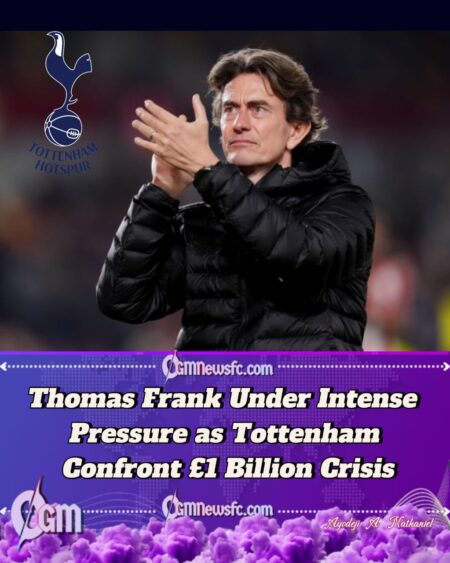
Thomas Frank finds himself at the centre of Tottenham Hotspur’s widening crisis as the club grapples with the long-term implications of a financial package that has ballooned to nearly £1 billion. Tottenham’s state-of-the-art stadium, once hailed as a transformative investment, has now become a defining challenge as economic pressure intensifies. The original expectations of rapid commercial growth have been slowed by fluctuating market conditions and rising operational costs, pushing the club into a more cautious financial posture.
Thomas Frank, brought in to stabilise results and maximise the talent within the squad, now faces scrutiny that goes beyond the pitch. Tottenham’s hierarchy is increasingly concerned about how on-field inconsistency is affecting commercial performance, ticketing projections, and sponsorship negotiations. With the stadium still central to the club’s long-term financial strategy, poor footballing results risk compounding an already delicate situation.
Thomas Frank has yet to deliver the level of consistency needed to reassure Tottenham’s board that the club can maintain its competitive and financial ambitions simultaneously. As revenue streams come under pressure, so too does the expectation placed on Frank to secure vital results that keep the club aligned with its financial targets.
Frank’s Tactical Approach Meets Growing Criticism
Thomas Frank’s tactical methods, once praised for their structure and discipline, are receiving increased criticism as Tottenham’s performances fluctuate. Frank has attempted to balance defensive organisation with attacking fluidity, yet the implementation has been inconsistent. Supporters have begun to question the clarity of Tottenham’s identity on the pitch, pointing to matches where the team has struggled to impose itself or respond effectively under pressure.
Thomas Frank’s supporters argue that the squad requires more time and targeted reinforcements, particularly given Spurs’ tightened financial stance. However, critics believe his game management and selection decisions have contributed to unnecessary dropped points. As Tottenham faces crucial fixtures over the coming weeks, the pressure on Frank to produce convincing performances is rising rapidly.
Thomas Frank now must demonstrate tangible progress, not only in results but in style and cohesion. With the spotlight intensifying, every tactical decision he makes is being evaluated through the lens of Tottenham’s wider financial anxiety.
Boardroom Concerns Heighten Managerial Uncertainty
Thomas Frank’s future is increasingly tied to discussions taking place behind closed doors at Tottenham’s highest levels. Club executives are divided over whether the manager has been given the adequate structural and financial tools needed to succeed. Some believe Frank is being unfairly evaluated within the limitations imposed by the club’s £1bn commitments, while others argue that the team’s stagnation demands a change in leadership.
Thomas Frank remains determined to steer the club through this challenging period, yet he is aware that the margin for error has drastically narrowed. Tottenham’s leadership has made no public comment, but internal sources suggest that the upcoming fixtures will play a significant role in determining Frank’s fate. Patience, once abundant, is becoming increasingly scarce.
Thomas Frank’s contract situation and long-term suitability are now active topics of debate, and Spurs may face tough decisions if results fail to improve quickly. The board is keenly aware that any managerial change must be weighed carefully against the club’s financial reality.
Supporters Voice Growing Concerns About Direction
Thomas Frank’s position is made even more fragile by increasing unrest among Tottenham supporters, who feel the club has entered a period of stagnation. Fans who once celebrated the ambition of the new stadium now express concerns that financial pressure has limited investment in key areas of the squad. The gap between expectations and reality has widened, and Frank is caught in the crossfire.
Thomas Frank has attempted to reassure fans through his openness about the club’s development plan, yet frustrations continue to rise. Supporters argue that Spurs have fallen behind their Premier League rivals, both on the pitch and in structured planning. For many, Frank’s leadership embodies the uncertainty that surrounds the club’s broader project.
Thomas Frank’s ability to manage supporter sentiment may prove crucial in the coming weeks. A string of positive results could ease tensions, but further setbacks risk deepening the divide between fans and the club’s decision-makers.
The Path Ahead: Tottenham Seek Stability Amid Pressure
Thomas Frank now faces a pivotal period in his Tottenham tenure. The club’s £1 billion financial weight means that decisions must be navigated carefully, ensuring that short-term reactions do not compromise long-term stability. Frank’s immediate task is to restore confidence through performance, consistency, and communication — all under an increasingly unforgiving spotlight.
Thomas Frank is expected to meet with key executives as the club evaluates the feasibility of its footballing and financial objectives. Spurs know that any misstep could exacerbate their existing challenges, making stability both essential and difficult to achieve. Frank’s ability to steer the team through this storm will likely determine whether he remains part of Tottenham’s future.
Thomas Frank’s situation has become emblematic of a modern football dilemma: balancing ambition with economic reality. Spurs are at a crossroads, and whether Frank survives this period may depend on how quickly the club can turn direction both on and off the pitch.