










Tottenham Hotspur are preparing for a significant financial and structural reset, with plans to dismantle their long-standing wage framework and invest heavily in the playing squad this summer—provided the club retains its Premier League status.
Currently positioned 16th in the league table and just four points above the relegation zone, Tottenham find themselves in an unfamiliar and precarious situation. Club insiders acknowledge that years of restrained spending on player salaries, combined with a severe injury crisis, have contributed to a campaign marked by inconsistency and underperformance.
With the summer transfer window approaching, the club’s ownership is said to be ready to authorise a major overhaul aimed at restoring competitiveness, signalling what could be one of the most transformative periods in the club’s modern history.
Tottenham Wage Structure Under Scrutiny
Tottenham’s wage bill has long trailed those of their traditional competitors among the so-called “big six” clubs. In the most recently published 2023–24 accounts, Spurs reported a wage expenditure of £222 million—little more than half of the £413 million recorded by Manchester City during the same period.
Although the wage commitment has risen following recent signings, the club’s salary-to-revenue ratio remains notably conservative. At 42 per cent of revenue, Tottenham’s wage spend is well below the Premier League average, reflecting years of fiscal discipline that prioritised sustainability over aggressive market competition.
Sources close to ownership suggest there is now a broad acceptance that this strategy has limited the club’s ability to compete at the highest level. Research and internal analysis reportedly indicate that league position correlates more strongly with wage expenditure than with transfer fees alone, prompting calls for a recalibration of financial priorities.
Gallagher Signing Signals a Turning Point
The £35 million acquisition of Conor Gallagher from Atlético Madrid is widely viewed inside the club as a watershed moment. Earning approximately £200,000 per week, Gallagher has become Tottenham’s highest-paid player, breaking with the rigid salary ceiling that previously defined recruitment policy.
Alongside additions such as Xavi Simons and Mohammed Kudus, the move reflects a gradual shift in strategy. However, insiders indicate that a more comprehensive transformation is planned once Premier League safety is mathematically secured.
Should Spurs avoid relegation, further high-profile arrivals are anticipated. The expectation is that the club will compete more assertively in the transfer market, both in terms of fees and personal terms, to attract players capable of elevating standards across the squad.
Ownership Shift and Strategic Reassessment
For years, Tottenham’s financial caution was synonymous with the tenure of former executive chair Daniel Levy, whose approach emphasised sustainability, infrastructure development, and prudent spending. That philosophy was shaped in part by the substantial loans required to finance the construction of the club’s £1 billion stadium.
However, Levy’s removal last September by the Lewis Family Trust marked a significant governance shift. The ownership group now appears prepared to adopt a more expansive approach, balancing fiscal responsibility with competitive ambition.
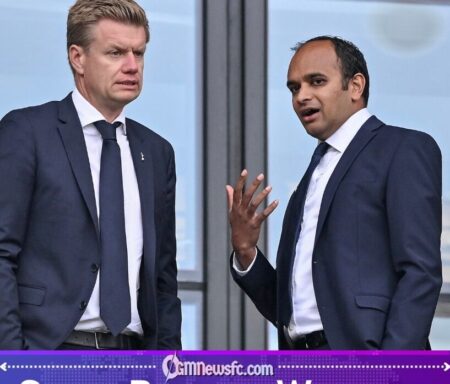
The club’s chief executive, Vinai Venkatesham, hinted at this change in direction last month, suggesting that Tottenham are prepared to “loosen the purse strings” to address performance gaps. The current league struggles have only reinforced the urgency of that reassessment.
Survival First, Transformation Next
Despite ambitious summer planning, Tottenham’s immediate priority remains securing Premier League survival. Sitting just four points above the relegation places, every remaining fixture carries heightened importance.
Avoiding relegation would not only protect broadcast revenues and commercial partnerships but also ensure the financial stability required to execute the planned rebuild. Relegation, by contrast, would likely force a reassessment of investment capacity and long-term strategy.
For now, the message from ownership appears clear: survival will unlock a new phase of spending and structural reform. If achieved, the coming summer could mark the beginning of a decisive new chapter for Tottenham Hotspur.