









United States President Donald Trump has announced that five players from Iran’s women’s national football team have reportedly been granted asylum in Australia after he publicly urged the Australian government to intervene. The situation emerged during the ongoing AFC Women’s Asian Cup, where the Iranian players reportedly refused to sing their national anthem before a match—an act that raised fears of possible reprisals if they returned to Iran.
According to Trump’s statement on social media, the decision followed discussions with Australian Prime Minister Anthony Albanese. While details remain limited, Trump indicated that several players had already received protection while others were still deciding whether to remain in Australia due to concerns about the safety of their families back home.
Anthem Protest Raises Safety Concerns
The controversy began when members of Iran’s women’s national football team reportedly refused to sing the country’s national anthem before their opening match at the tournament hosted in Australia. The act was widely interpreted as a form of protest and quickly sparked global attention.
Observers suggested that the gesture could expose the players to potential punishment if they returned to Iran, where political dissent by public figures is often scrutinized. Advocacy groups and supporters quickly called on Australian authorities to provide protection or asylum to the players while they were still on Australian soil.
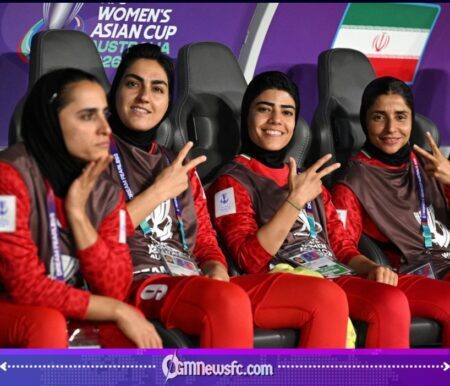
Concerns intensified after footage circulating online appeared to show the team bus leaving the stadium following a 2–0 defeat to the Philippines women’s national football team, with some players seemingly signaling distress. In some videos, players were alleged to have used hand gestures resembling an “SOS” signal.
Trump Urges Australia to Offer Asylum
President Trump publicly intervened in the matter by posting an appeal on social media directed at Prime Minister Albanese. In his message, Trump warned that forcing the players to return to Iran could amount to a “terrible humanitarian mistake.”
Trump also suggested that the United States would be prepared to accept the players if Australia declined to grant them asylum. His intervention quickly drew international attention and intensified discussions around the safety of the athletes.
Shortly afterward, Trump posted an update saying he had spoken directly with Albanese and claimed that five players had already been granted asylum. However, official confirmation from Australian authorities has not been fully detailed publicly, leaving some aspects of the situation unclear.
Reports of Players Seeking Refuge
In the hours before the team’s scheduled departure from Australia, reports emerged that several players had slipped away from government minders accompanying the team. According to media accounts, five players allegedly sought refuge in a safe location within Australia.
These reports suggested that the players were attempting to avoid returning to Iran while their asylum options were being explored. Supporters and advocacy groups have argued that such steps demonstrate the level of fear some athletes may feel about potential consequences.
At the same time, other members of the squad reportedly chose to return home. Some players were said to be worried about threats against their relatives or concerned about possible repercussions for family members if they remained abroad.
A Delicate Diplomatic and Humanitarian Issue
The situation has placed Australia in a complex position, balancing humanitarian concerns with diplomatic considerations. Granting asylum to athletes from another nation can have broader political implications, particularly when it involves public acts of protest during an international sporting tournament.
Trump, in his follow-up message, praised Albanese for handling what he described as a “rather delicate situation.” He also noted that while some players were choosing to remain in Australia, others felt compelled to return because of fears for their families’ safety.
Meanwhile, reactions have been mixed among Iranian observers. Some critics reportedly labeled the protesting players “traitors,” while others viewed their actions as an expression of personal or political conviction.
Broader Implications for Sport and Politics
The episode highlights the intersection between international sport and political expression. Athletes have increasingly used global tournaments as platforms to draw attention to political or human-rights concerns in their home countries.
For the players involved, the decision to protest or seek asylum may carry significant personal consequences. Their situation also raises broader questions about the responsibility of host nations when athletes claim fear of persecution.
As the AFC Women’s Asian Cup continues, the fate of the remaining players and the long-term outcome of the asylum requests remain uncertain. Authorities in Australia have yet to provide a detailed public account of the process or confirm whether additional players will be granted protection.