


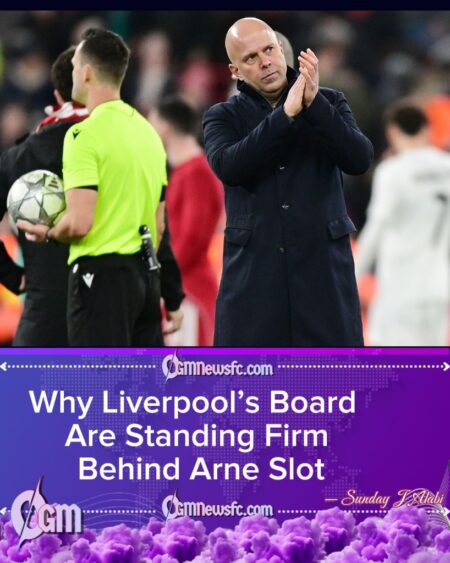
Liverpool’s emphatic 6–0 demolition of Qarabag at Anfield offered Arne Slot a rare moment of calm in an otherwise turbulent season. With qualification for the Champions League last 16 secured and confidence briefly restored, the result also underlined why the club’s hierarchy remain firmly behind the Dutch coach, even as domestic struggles fuel speculation about his future.
Despite sitting outside the Premier League’s top four and enduring an inconsistent run of form, there is no sense within Anfield’s corridors of power that Slot is on the brink. Instead, Liverpool’s leadership continues to view the current campaign as one shaped by transition, injuries, and extraordinary circumstances rather than managerial failure.
A Statement Night in Europe Amid Domestic Uncertainty
Liverpool’s rout of Qarabag was not merely about progression in Europe; it was about control, authority, and relief. From the opening minutes, Slot’s side played with a fluency and intensity that has often been absent in league fixtures, sweeping aside opponents who had previously troubled heavyweight clubs in the competition.
Finishing third in the league phase ensured Liverpool bypassed February’s play-off round, easing pressure on an already stretched squad. With potential last-16 opponents including Juventus, Atletico Madrid, Club Brugge, or Galatasaray, the Reds also earned the advantage of a home second leg — a significant boost given Anfield’s European pedigree.
The victory was particularly notable in context. Qarabag had beaten Benfica, Copenhagen, and Eintracht Frankfurt earlier in the campaign and had held Chelsea to a draw. Liverpool’s ability to dismantle such opposition so comprehensively suggested that the team’s ceiling remains high, even if consistency has been elusive.
Injury Crisis and Squad Limitations Test Slot’s Flexibility
Slot’s tactical adaptability has been tested relentlessly this season, nowhere more so than during the Qarabag match itself. When Jeremie Frimpong was forced off early with a groin injury, Liverpool were left without seven senior players, compelling midfielders to fill defensive roles.
Wataru Endo was deployed at right-back, while Ryan Gravenberch operated as a makeshift centre-back — a scenario emblematic of the squad’s current strain. Such improvisation has become routine rather than exceptional, undermining rhythm and continuity across competitions.
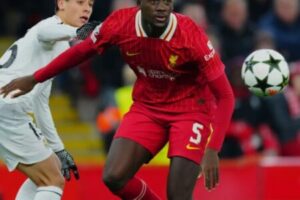
The club remains hopeful that the situation will improve when European action resumes in March. Ibrahima Konate is expected back soon, Joe Gomez has an outside chance of returning, and Curtis Jones is recovering from illness. These potential reinforcements are seen internally as crucial to stabilising performances in the decisive months ahead.
Liverpool Domestic Form and the Noise Around Slot’s Future
While Europe has provided respite, Liverpool’s Premier League form has been far less convincing. Just five wins in their last 18 league matches have seen the club slide to sixth, intensifying debate over Slot’s long-term suitability and raising questions about Champions League qualification next season.
The speculation gathered momentum following a painful defeat at Bournemouth, compounded by victories for rivals Manchester United and Chelsea. Comparisons were quickly drawn with those clubs’ recent managerial changes, which yielded short-term improvements after Ruben Amorim and Enzo Maresca were dismissed.
However, Liverpool’s hierarchy rejects the notion that a similar reset is required. Unlike at United or Chelsea, there has been no breakdown in trust or communication between Slot and the club’s executives. Pressure exists, but it is not accompanied by panic.
Strong Internal Backing and Strategic Continuity
Central to Slot’s job security is his relationship with sporting director Richard Hughes, who led the search for Jurgen Klopp’s successor in 2024. Hughes remains convinced that Slot was the outstanding candidate and continues to believe in his coaching acumen.
Slot’s status as a Premier League title-winning coach also carries weight. Such pedigree traditionally buys patience at Liverpool, particularly in a season widely viewed internally as transitional. Expectations soared after last year’s success, but the club acknowledges the scale of change since then.
Recruitment strategy further explains the calm approach. As head coach rather than manager, Slot does not wield full control over transfers. Decisions on squad investment lie with Hughes and Fenway Sports Group’s CEO of football, Michael Edwards, operating within a data-led, long-term model. Claims that Liverpool have delayed January spending due to doubts over Slot are dismissed internally as unfounded.
Signs of Progress and the Road Ahead
Despite scrutiny of last summer’s spending, there is no buyer’s remorse within the club. The partnership between Hugo Ekitike and Florian Wirtz is beginning to flourish, while Frimpong and Milos Kerkez have shown steady improvement. Injuries have limited the impact of Alexander Isak and Giovanni Leoni, delaying fair assessment.
More concerning has been the dip in form of established stars. Mohamed Salah, Cody Gakpo, Alexis Mac Allister, and Konate have all struggled for consistency. The Qarabag match, however, offered encouragement: Salah ended an eight-game goal drought, while Mac Allister scored twice in a single match for the first time in his Liverpool career.
Slot’s overall win percentage remains historically strong, placing him above several iconic figures in the club’s managerial history. While the Kop has yet to fully rediscover its voice in his support, the reception he received after Wednesday’s win suggested goodwill remains. Tougher tests — beginning with Newcastle and followed by Manchester City — will shape the next chapter, but internally, confidence in Slot’s leadership endures.