









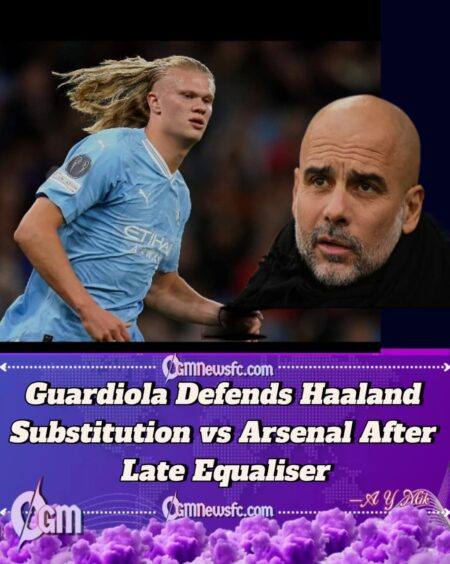
Manchester City showdown with Arsenal was billed as one of the defining fixtures of the season, and for much of the game, it lived up to the hype. Erling Haaland, Manchester City prolific striker, wasted no time stamping his authority on the contest. Just minutes into the match, the Norwegian star picked up the ball in his own half, combined brilliantly with Tijjani Reijnders, and raced half the length of the pitch before slotting home the opener.
His early goal not only set the tone for City’s aggressive approach but also showcased his trademark pace and power. Haaland remained a constant outlet up front, stretching Arsenal’s defense and keeping the pressure on. He came close to doubling his tally in the second half, but his effort went narrowly wide, leaving the game precariously balanced.
Guardiola’s Surprising Substitution Raises Questions
As the match progressed, Manchester City appeared to be edging toward a hard-fought victory. With the Blues holding a narrow lead, Pep Guardiola made a series of defensive-minded substitutions. First, Phil Foden was withdrawn for Nathan Aké, a move designed to shore up the backline. Moments later, fans were left stunned when Erling Haaland’s number was raised.
With just 15 minutes of normal time remaining, Haaland was replaced by midfielder Nico González. The change looked puzzling to many observers, particularly as Haaland had been City’s main attacking threat throughout the evening. Supporters and pundits alike questioned whether Guardiola had been overly cautious, especially given Arsenal’s ability to strike late in big games.
Guardiola Explains Haaland’s Withdrawal
After the final whistle, Guardiola moved quickly to clarify his decision. According to the City boss, Haaland had been battling back pain throughout the week leading up to the Arsenal clash. Although the striker was cleared to start, Guardiola admitted that his discomfort became more noticeable in the latter stages of the match.
“Erling has been feeling some issues with his back this week,” Guardiola explained in his post-match interview. “He gave everything tonight, but with the pain and the intensity of the game, I decided to take him off. It was not a tactical change against Arsenal; it was about protecting him.”
This revelation put the decision into perspective. While many had assumed the substitution was a defensive ploy, Guardiola emphasized that Haaland’s well-being was the priority.
Late Arsenal Equaliser Adds Pressure on Substitutions
City looked poised to collect all three points until a lapse in concentration deep into stoppage time changed the narrative. Eberechi Eze, fresh off the bench for Arsenal, delivered a perfectly weighted ball over the top of City’s defense. Gabriel Martinelli latched onto it and coolly slotted past Ederson to level the score at 1–1.
The late equaliser not only cost City valuable points but also invited scrutiny of Guardiola’s substitutions. Critics suggested that withdrawing Haaland left City without a direct outlet in attack, encouraging Arsenal to push higher up the pitch. With both Foden and Haaland off the field, City’s attacking transitions lacked the same sharpness.
Nevertheless, Guardiola stood firm in his defense of the changes. “We wanted to manage the game better in the final minutes, but unfortunately, we switched off at the wrong time. That’s football,” he remarked.
What Haaland’s Back Pain Means for Manchester City
The bigger concern now for City fans is Haaland’s fitness moving forward. Back problems, particularly for strikers who rely heavily on acceleration and physical duels, can be tricky to manage. Guardiola’s decision to withdraw him early was aimed at reducing the risk of aggravating the issue.
Manchester City medical staff are expected to monitor the Norwegian closely in the coming days, with key fixtures ahead both domestically and in Europe. Haaland has been central to Manchester City attack since his arrival, and any prolonged absence could significantly impact the team’s goal-scoring prowess. Supporters will be eager for updates and hopeful that this discomfort is a short-term setback rather than a lingering problem.
Balancing Short-Term Results with Long-Term Goals
Ultimately, Guardiola’s choice to substitute Haaland highlights the delicate balance managers must strike between immediate results and player welfare. In the short term, Manchester City may have sacrificed two points against Arsenal, but ensuring Haaland’s availability for the long season ahead could prove far more valuable.
Manchester City’s title aspirations rest heavily on Haaland’s shoulders. With his goal-scoring instincts and physical dominance, he remains one of the most feared forwards in world football. Guardiola’s decision may frustrate fans in the moment, but if it preserves Haaland’s fitness for the decisive months of the campaign, it could prove to be a wise and necessary move.