








Former Egypt assistant coach Diaa El-Sayed has offered a forceful assessment of the ongoing debate surrounding Mohamed Salah, cutting through weeks of speculation with a statement rooted in public sentiment rather than conjecture. His declaration that “99% of Egypt supports Salah” reframes the conversation as one extending far beyond routine club matters.
El-Sayed’s words carry authority not because they speculate on contracts or tactics, but because they speak to cultural reality. As someone embedded in Egyptian football, his perspective reflects how Salah is perceived nationally: not merely as a player navigating a professional dispute, but as a figure whose career decisions resonate deeply with millions.
Egypt’s Overwhelming Backing and National Identity
In Egypt, Salah’s standing transcends football. El-Sayed’s assertion of near-universal support is indicative of a bond forged through years of representation at the highest level, where Salah has become a symbol of excellence, perseverance, and global relevance.
This national loyalty explains why developments in Salah’s club career are followed so closely at home. For many Egyptians, support for Salah is inseparable from pride in national achievement, making criticism of him—fair or otherwise—feel personal rather than analytical.
Anfield’s Verdict: Loyalty in Full Voice
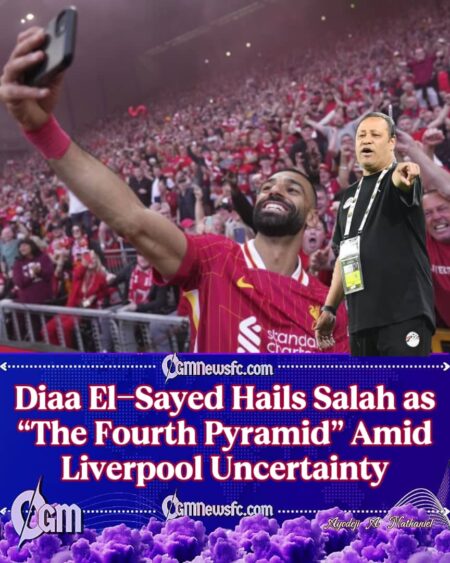
El-Sayed also pointed to the reaction at Anfield as evidence that Liverpool supporters remain firmly aligned with their star forward. The atmosphere inside the stadium, marked by chants, applause, and visible displays of affection, suggests that fan sentiment has not fractured despite persistent uncertainty.
Such backing matters profoundly in modern football. Supporters are often the first to sense a shift in trust, yet in Salah’s case, the connection with the crowd appears intact. The Anfield response reinforces the idea that whatever tensions exist, they have not eroded the emotional bond between player and fans.
Liverpool, Speculation, and the Modern Football Climate
At Liverpool, the context surrounding Salah has been shaped by broader questions about squad planning, long-term vision, and commercial realities. These dynamics have fueled speculation, even as on-pitch performances continue to underline his importance.
El-Sayed’s comments challenge narratives suggesting isolation or dwindling support. Instead, they highlight a disconnect between external commentary and internal sentiment, particularly among supporters who view Salah as central to the club’s modern identity.
“The Fourth Pyramid” and Cultural Immortality
Perhaps the most striking element of El-Sayed’s remarks was his reference to Salah as the “Fourth Pyramid.” The phrase is more than hyperbole; it reflects how Salah has been woven into Egypt’s cultural imagination alongside its most enduring monuments.
This status confers a form of immortality rarely achieved by athletes. It also explains why Salah’s career choices are scrutinized through a cultural lens, where symbolism and legacy carry as much weight as trophies and statistics.
Legacy, Leverage, and What Comes Next
El-Sayed’s intervention ultimately reframes Salah’s situation as one of legacy rather than leverage alone. With unwavering backing from his home nation and clear support from the stands, Salah occupies a uniquely strong position in any ongoing discussions about his future.
While outcomes remain uncertain, the broader picture is unmistakable. Mohamed Salah’s influence—on Liverpool, on Egypt, and on global football culture—remains undiminished, cemented by a level of public loyalty that few players in the modern era can claim.