










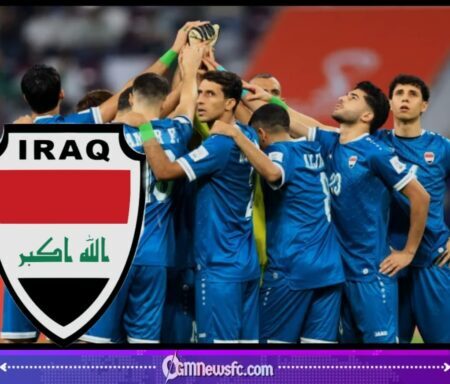
In a scene that feels more like a Hollywood script than a football story, the Iraq national team is gearing up for a trans‑Atlantic trip to Mexico for a crucial World Cup play‑off — all while turmoil unfolds in the Middle East. Airspace closures, political tensions, and travel chaos have set the stage for one of the most unusual qualification campaigns in recent history.
Iraq hasn’t been to a FIFA World Cup since 1986, and this play‑off — against the winner of Bolivia vs Suriname — represents a rare chance to re‑enter football’s most prestigious stage. But between missile strikes, regional airspace restrictions, and the ongoing tensions involving the United States, Israel and Iran, simply getting the squad to Monterrey has proven more dramatic than the match itself.
Fans might be forgiven for thinking this was the plot of a new sports‑drama movie. But no — this is real life. And for Iraq’s players and staff, this journey involves more careful planning than a holiday trip with eight passports, six luggage tags, and more diplomatic paperwork than a United Nations summit.
“Coach’s Plea: ‘Postpone the Match!’”
When news broke that the Iraqi team could be stranded or split across multiple countries, head coach Graham Arnold did what most sensible football managers would do — he begged for a postponement. The Australian tactician publicly called on FIFA to delay the play‑off, emphasizing that key players were stuck, travel routes had vanished, and preparations were in total disarray.
In a world where coaches complain about referee decisions and training pitches, Arnold’s plea was on a different level — “We can’t prepare our team when half of us can’t be in the same zip code,” he might have said if direct quotes were easier to come by. His concern was about fairness, player safety and giving Iraq a decent shot at the World Cup, rather than a footballing version of musical chairs.
But FIFA, sticking to its schedule and rules, gave the go‑ahead. So while other coaches worry about tactical formations, Arnold’s latest challenge has been making sure his squad can physically make it to the kick‑off.
“Airspace Chaos and Travel Headaches”
Here’s where the plot thickens: Iraq’s airspace has been largely shut down due to the escalating conflict. What does that mean in simple terms? No regular flights. No commercial routes. No quick hops across the sky. In other words — no easy way to get a football team from Baghdad to Mexico City.
Imagine trying to plan a family vacation when half of the airports on Earth have locked their doors. That’s the logistical nightmare Iraq is facing. Players scattered across Europe and the Middle East have been trying to converge with varying degrees of success. Some have visas, some don’t. Some have flights, some have optimism.
Training camps were canceled. Coaches tried coordinating from separate continents. Phones buzzed with travel updates more frequently than nightlife notifications in Ibiza.
“Operation Private Jet: The Charter Plan That Saved the World Cup Dream”
With commercial flights out of the question, the Iraqi Football Association (IFA) pulled a move that sounds like something out of a James Bond script: they chartered a private plane. Yes, a full‑on private jet mission to carry the national team to Mexico.
IFA president Adnan Dirjal announced that the team would depart on a specially arranged aircraft that would fly directly to the United States and onwards to Monterrey, Mexico. The plan is to reassemble as many players as possible onboard and give Iraq its best possible lineup for the decisive match.
It didn’t come cheap — but then again, qualifying for the World Cup doesn’t usually involve chartered aircraft, diplomatic discussions, and airspace diplomacy. If this trip were any more exclusive, it would come with champagne service and suede seats.
“Why This Match Matters More Than Ever”
To most teams, a single play‑off is a high‑stakes affair. To Iraq, this match is a moment of national pride, hope, and historical chance. The country has endured decades of conflict, reconstruction and hardship. A return to the FIFA World Cup — even after 40 years — would be a moment of joy and unity shared by millions.
For the players, too, it’s a chance to step onto one of football’s biggest stages and prove they belong. For supporters around the world — particularly in Iraq and the large Iraqi diaspora — this match is more than just 90 minutes of football. It’s a symbol that dreams are bigger than borders and that sport can transcend even the most difficult circumstances.
Whether they win or lose, Iraq’s journey already tells a story worth telling in stadiums, living rooms and newsstands across the globe.