









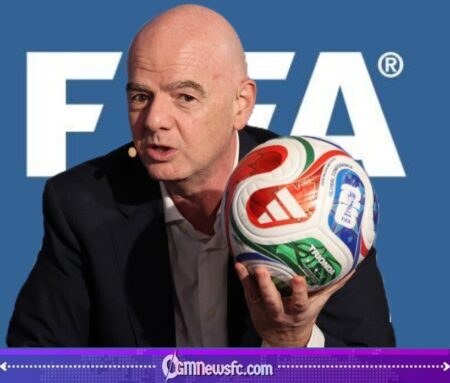
FIFA President Gianni Infantino has defended the soaring cost of tickets for the 2026 FIFA World Cup, insisting that the prices reflect market demand in the United States and rejecting claims that football’s biggest tournament is becoming inaccessible to ordinary supporters. His comments come amid widespread criticism over ticket prices that, in some cases, have reached extraordinary levels on resale platforms.
The tournament, which will be jointly hosted by United States, Mexico and Canada, is already generating unprecedented interest, with FIFA reporting hundreds of millions of ticket requests. However, the excitement surrounding the competition has been accompanied by growing concerns that loyal fans are being priced out of attending matches.
FIFA Insists Prices Reflect Global Demand
Infantino argued that the prices attached to World Cup tickets are not unreasonable when compared with other major sporting and entertainment events in the United States. According to the FIFA chief, the American sports market already operates at premium pricing levels, making the World Cup’s rates consistent with existing standards.
He pointed out that tickets for major college sports events and elite professional games in the United States regularly cost hundreds of dollars, adding that the World Cup represents one of the most prestigious sporting events in the world. FIFA believes the enormous global demand for the tournament justifies the pricing structure currently in place.
Infantino also stressed that FIFA itself is not responsible for the eye-watering resale prices circulating online. Some tickets for the World Cup final have reportedly appeared on resale platforms for as much as $2 million, though FIFA maintains these figures are not official prices set by the organisation.
The “Hot Dog and Coke” Remark Sparks Debate
The FIFA president drew significant attention after joking that he would personally serve a hot dog and a Coca-Cola to anyone willing to pay $2 million for a World Cup final ticket. While the comment appeared intended to lighten the discussion, critics viewed it as tone-deaf at a time when many ordinary supporters are struggling with the rising cost of attending football matches.
Infantino insisted that the existence of extremely expensive resale tickets does not mean fans are actually purchasing them at those amounts. He argued that resale platforms naturally inflate prices when demand is exceptionally high, particularly in a market such as the United States where ticket reselling is legally permitted and widely practiced.
The remarks nevertheless intensified online criticism, with many supporters arguing that football’s governing body risks alienating traditional fans. Critics believe the World Cup, historically celebrated as a tournament for global football communities, is increasingly becoming an event dominated by wealthy spectators and corporate hospitality.
FIFA Forced to Introduce More Affordable Tickets
Facing mounting criticism over ticket costs, FIFA recently expanded the number of lower-priced tickets available for supporters. The organisation allocated a portion of tickets specifically for “loyal fans,” representing roughly 10 percent of each national football association’s allocation.
The introduction of cheaper tickets followed widespread backlash from supporters, fan groups and political figures who argued that the original prices placed attendance beyond the reach of many working-class fans. FIFA acknowledged the criticism by adjusting parts of its ticketing strategy, although premium pricing remains in place for many high-demand fixtures.
Group-stage ticket prices continue to vary depending on the popularity of the teams involved. England supporters, for example, are expected to pay considerably more than fans following smaller football nations. Matches involving the United States and other major football markets are also commanding particularly high prices.
Political Pressure Mounts Over Accessibility
British Prime Minister Keir Starmer joined the growing list of public figures expressing concern over ticket affordability. Starmer welcomed FIFA’s decision to release more affordable tickets but urged the organisation to take further action to protect ordinary supporters.
The British leader noted that football’s atmosphere and identity depend heavily on passionate fans who have followed their national teams for years. He warned that excessive pricing risks disconnecting the World Cup from the communities that traditionally form the backbone of international football support.
Football supporters’ organisations across several countries have echoed similar concerns. Many fear that the increasing commercialisation of the tournament could permanently change the culture of attending major football events, replacing long-standing supporters with wealthier consumers and corporate guests.
Record Demand Driving Ticket Frenzy
Despite the controversy, demand for World Cup tickets remains extraordinarily high. Infantino revealed that FIFA has already received more than 500 million ticket requests for the 2026 tournament — a dramatic increase compared with previous editions in Russia in 2018 and Qatar in 2022.
The expanded 48-team format, combined with the popularity of football in North America and the global appeal of the competition, is expected to make the 2026 World Cup the biggest in history. Major cities such as Los Angeles, New York City and Toronto are expected to attract massive international crowds.
While FIFA views the unprecedented demand as proof of the tournament’s success and value, critics continue to argue that popularity should not come at the expense of accessibility. The debate over affordability is likely to remain a major talking point as the countdown to the tournament continues.