








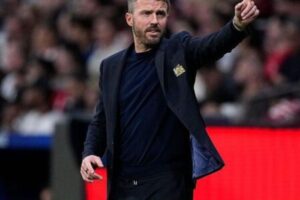

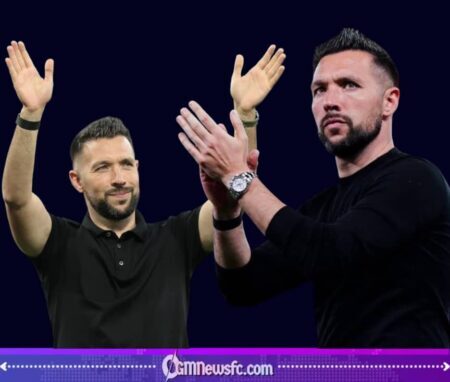
Francesco Farioli has etched his name into Portuguese football history by leading FC Porto to the Primeira Liga title in his very first season at the helm. The achievement has been widely described as extraordinary, given the immense pressure and expectations that come with managing one of Portugal’s biggest clubs.
From the outset, Farioli faced the daunting task of delivering immediate success while adapting to a new league and environment. Yet, rather than showing signs of transition struggles, his Porto side quickly established itself as a dominant force, combining tactical discipline with consistent results.
Winning the league in a debut campaign is a rare accomplishment, particularly in a competitive environment. Farioli’s success has not only delivered silverware but also signaled the arrival of a manager capable of thriving at the highest level.
A Tactical Identity That Defined the Season
Central to Porto’s success has been Farioli’s clear and modern tactical philosophy. His approach emphasizes structured build-up play, positional awareness, and a balanced style that allows the team to control matches both with and without the ball.
Under his guidance, Porto developed a system that was both flexible and effective. The team demonstrated the ability to adapt to different opponents while maintaining a consistent identity, a hallmark of elite coaching. This tactical clarity enabled Porto to dominate possession when required and remain resilient under pressure.
The result was a team that not only won matches but did so with a sense of control and purpose. Farioli’s methods have drawn praise across Europe, with many viewing his approach as a model of modern football management.
Mastering Pressure in a Demanding Environment
Managing Porto is synonymous with expectation. The club’s supporters demand success, and the margin for error is minimal. Farioli’s ability to navigate this environment has been one of the defining aspects of his debut season.
Throughout the campaign, Porto faced strong competition from rivals such as Benfica and Sporting CP. These challenges required not only tactical acumen but also mental resilience and composure.
Farioli’s calm and methodical approach proved crucial. He maintained focus within the squad, ensuring that external pressures did not disrupt performance levels. This stability allowed Porto to sustain their title charge from start to finish.
Player Development and Squad Evolution
Another key factor in Porto’s triumph has been the development of players under Farioli’s leadership. Rather than relying solely on established stars, he has elevated the performance of the entire squad.
Several players have enjoyed standout seasons, benefiting from clearly defined roles and a system that maximizes their strengths. Younger talents have also been given opportunities, contributing to the team’s success while gaining valuable experience.
This emphasis on development reflects a long-term vision. Farioli has not only delivered immediate results but has also laid the groundwork for sustained success by building a cohesive and adaptable squad.
Consistency as the Foundation of Success
Porto’s title-winning campaign has been characterized by remarkable consistency. Unlike seasons defined by dramatic late surges, this triumph was built on steady performance and the ability to secure results week after week.
The team’s defensive solidity played a crucial role, providing a reliable foundation upon which attacking success could be built. At the same time, Porto demonstrated efficiency in front of goal, capitalizing on key moments to secure victories.
This balance between defense and attack ensured that Porto rarely faltered, even during challenging periods. Consistency, rather than occasional brilliance, ultimately proved to be the decisive factor in their title success.
A New Era Begins for Porto and Farioli
Farioli’s achievement has elevated his status within European football, marking him as one of the most promising managers of his generation. His success at Porto is likely to attract attention from top clubs across the continent.
For Porto, the title represents more than just a single triumph. It signals the beginning of a new era under a manager who has demonstrated both tactical intelligence and leadership. The club now has a foundation upon which it can build future success, both domestically and in European competitions.
As celebrations continue, attention will inevitably turn to what comes next. If Farioli can maintain this level of performance, his debut season may be remembered not just as a remarkable achievement, but as the start of a lasting legacy.