





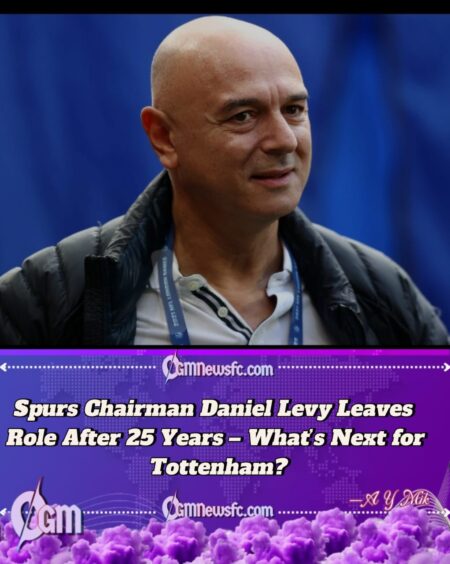
Daniel Levy’s departure from Tottenham Hotspur marks the conclusion of one of the most remarkable reigns in Premier League history. Serving as chairman since March 2001, Daniel Levy was the longest-serving executive in the league and leaves behind a legacy that has sparked both admiration and controversy. Spurs confirmed in a statement that he has “stepped down,” although BBC Sport revealed the move was not entirely his choice.
According to sources close to the club, the ownership group decided that Daniel Levy’s exit was necessary to usher in a new chapter of sporting success. The decision was carefully timed, coming right after the summer transfer window closed and just months after Spurs finally lifted a European trophy. For many fans, this moment signals the beginning of long-awaited change.
Despite being respected across world football for his sharp negotiating skills, Levy was also a polarizing figure among the Spurs faithful. His tenure was filled with both bold infrastructure projects and recurring criticisms over lack of investment in players.
Achievements and Milestones During Levy’s Reign
Daniel Levy’s time at Tottenham was not without notable achievements. Under his leadership, the club modernized its facilities, most notably with the construction of the state-of-the-art Tottenham Hotspur Stadium and the training complex at Hotspur Way. These developments transformed Spurs into a financially stable powerhouse capable of competing with Europe’s elite.
On the sporting front, Daniel Levy celebrated two major trophies with Spurs: the League Cup in 2008 and, most recently, the Europa League in May 2025, which ended a 17-year drought. These wins provided temporary relief to fans who had grown restless with near misses and lost opportunities in domestic and continental competitions.
Financially, Levy earned over £50 million during his tenure, reflecting the value the club placed on his stewardship. However, for many supporters, the limited silverware compared to rival clubs made his achievements feel insufficient.
Fan Frustration and Protests Against Levy
Despite the progress made behind the scenes, Daniel Levy was often at the center of fan protests, especially in recent years. Supporters voiced frustration over perceived lack of ambition in the transfer market, with calls for his resignation becoming louder during the 2023/24 season.
Many believed Levy prioritized financial prudence over building a squad capable of consistently winning silverware. Though he expanded revenue streams and positioned Spurs as a global brand, critics argue that the club missed key opportunities to strengthen on the pitch when it mattered most.
Protests outside the stadium and online campaigns demanding his exit became a frequent occurrence, casting a shadow over the latter part of his reign. For some fans, his resignation has been seen as a victory that could finally reset the club’s ambitions.
Ownership’s Role in Levy’s Exit
The decision to part ways with Daniel Levy was ultimately made by the Lewis family, who own the club through Tavistock Group. While 88-year-old Joe Lewis maintained a peripheral role in the process, younger family members, including his children Vivienne and Charlie, played a more decisive part.
Vivienne Lewis has become a more visible figure at Tottenham in recent months, attending high-profile matches and engaging with club matters more directly. Alongside her, Nick Beucher, Joe Lewis’s grandson-in-law, has also taken on greater involvement. Their influence, combined with growing pressure from supporters, is believed to have paved the way for Levy’s departure.
This generational shift in leadership signals a potential change in strategy for Spurs, with fans eager to see whether the Lewis family will invest more heavily in player recruitment and sporting infrastructure.
Daniel Levy’s Farewell Message to Fans
In his departure statement, Daniel Levy expressed pride in his accomplishments and gratitude toward those he worked with over the years. He highlighted the transformation of Spurs into a “global heavyweight” and emphasized the sense of community the club has built.
“I was lucky enough to work with some of the greatest people in this sport, from the team at Lilywhite House and Hotspur Way to all the players and managers over the years,” Levy said. He also acknowledged the challenges he faced, admitting the journey had not always been easy, but insisted that “significant progress has been made.”
Despite stepping down, Levy pledged to remain a supporter of the club, maintaining his emotional ties to an institution he helped shape for nearly a quarter of a century.
What’s Next for Tottenham Hotspur?
Levy’s departure leaves Spurs at a crossroads. While the new leadership has yet to announce his successor, expectations are high that the next executive team will bring a fresh vision to match the demands of modern football. Supporters are calling for a more aggressive transfer policy and a stronger emphasis on consistent silverware.
The timing of the exit, just after the transfer window, ensures the incoming leadership can focus on long-term planning without immediate disruption. Still, questions remain over whether the Lewis family is prepared to break from the conservative financial model Levy maintained.
For now, Tottenham fans are cautiously optimistic. The end of Levy’s reign represents both the close of a controversial chapter and the opening of new possibilities. Whether this leads to greater success on the pitch or simply more of the same will depend on how bold the ownership is willing to be.