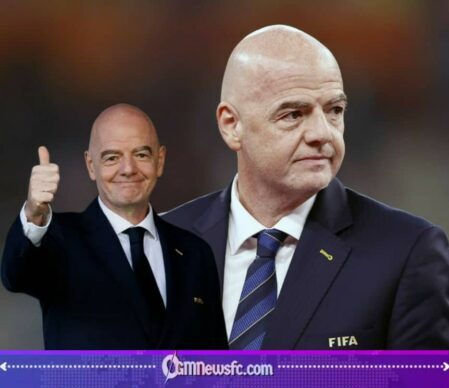
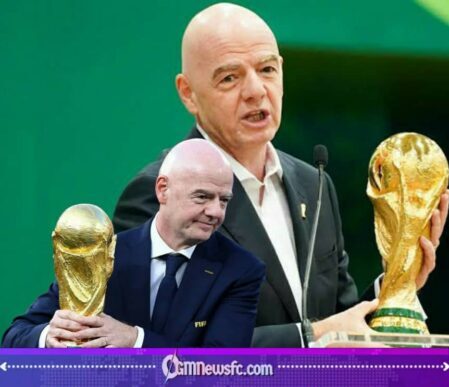
A week is indeed a long time in politics — and apparently an eternity in football politics. FIFA president Gianni Infantino has entered one of the most uncomfortable periods of his leadership after the governing body abandoned its controversial plan to sell a stake in the commercial business connected to the World Cup following fierce opposition from major football powers. The proposal, which reportedly involved selling 20% of a newly created commercial entity to private investors, triggered a backlash led by UEFA and raised questions about consultation, governance and who exactly gets to decide what happens to football’s biggest tournament.
The timing could hardly be more awkward for Infantino. Only weeks ago, FIFA was celebrating the commercial success of the 2026 World Cup, with Infantino saying the organisation expected revenues of more than $15 billion for the 2023-26 cycle and claiming that more than 200 member associations had pledged support for his 2027 re-election bid. Now, instead of simply preparing for another coronation, FIFA’s president is having to answer questions about whether his political capital has suddenly developed a leak.
The Investment Plan That Became an Investment Problem
The proposed deal was supposed to unlock commercial opportunities and provide FIFA with additional resources for football development. Instead, it became a political football of the highest order. UEFA and other confederations objected strongly, with UEFA declaring that it had lost confidence in Infantino’s handling of the proposal and threatening extraordinary resistance if the plan went ahead. Infantino eventually withdrew it, acknowledging that the initiative had created divisions and was no longer serving its original purpose.
For a governing body that frequently talks about unity, that is rather an inconvenient scoreline. The irony is especially sharp because FIFA has repeatedly presented its financial strength as a tool for reinvestment across global football. Earlier this year, FIFA announced record distributions around the World Cup and said billions would be channelled into development programmes across its 211 member associations. The argument for generating more money is therefore easy to understand; the political argument over who controls the commercial machinery is considerably harder to defend.
Infantino’s Political Cushion Suddenly Looks Less Comfortable
The latest crisis also lands on top of a growing series of controversies surrounding Infantino’s political relationships and the boundaries between football governance and political influence. During the World Cup, Donald J. Trump, the current president of the United States, became involved in the Folarin Balogun disciplinary controversy after speaking with Infantino about the player’s suspension. The subsequent handling of the case prompted criticism and calls for scrutiny over FIFA’s independence.
Infantino has nevertheless remained defiant, portraying the 2026 tournament as an extraordinary success and accusing some critics of concentrating so heavily on controversy that they failed to appreciate the event itself. FIFA says the tournament exceeded expectations, while Infantino has repeatedly emphasised the commercial opportunities created by its success. The problem is that football politics does not award points simply for having a successful World Cup; eventually, somebody has to explain the decisions made behind the curtain.
The next question, therefore, is not merely whether FIFA can recover from one abandoned investment proposal, but whether Infantino can restore confidence among the powerful organisations that ultimately make up the football governing system. He still has considerable support among FIFA’s membership, and the collapse of one proposal does not automatically mean the end of his presidency. But after 24 bruising hours, the man who appeared to be cruising towards another term now has a political storm to navigate — and, in football politics, even a 1-0 lead can disappear before the final whistle.
OGM News FC will continue watching the developing FIFA drama closely. The investment proposal may be dead, but the political consequences are very much alive, and the coming days could determine whether this was simply a painful tactical retreat for Infantino or the beginning of a much larger challenge to his leadership. In football politics, as everyone has now been reminded, one week can be a very, very long time.