










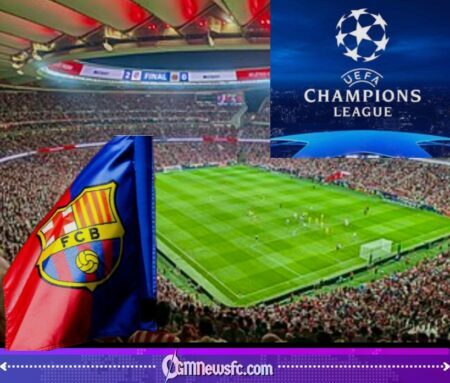
For FC Barcelona, European nights were once synonymous with magic, comebacks, and silverware. But this season, the story ended far earlier than expected as FC Barcelona bowed out of the UEFA Champions League at the quarter-final stage.
Their elimination came at the hands of Atlético Madrid in a tightly contested tie that finished 3–2 on aggregate. Barcelona won the second leg 2–1, but it was not enough to overturn the deficit. The result left players visibly frustrated, with some pointing fingers at key refereeing decisions that they felt changed the course of the tie.
Beyond the emotions and post-match complaints, however, a more sobering reality quickly emerged: Barcelona did not just lose a match—they lost a financial opportunity worth millions.
The €40 Million That Vanished with One Elimination
Early elimination from the Champions League has reportedly cost Barcelona up to €40 million in additional revenue, a figure that would have significantly boosted their seasonal finances.
Breaking it down, the missed earnings include:
€15 million for reaching the semi-finals, €18.5 million for reaching the final, €6.5 million for potentially winning the competition
In football terms, that is not just pocket change—it is a potential transfer budget, a wage buffer, or at the very least, a very expensive missed penalty.
While the club still earned a substantial base payout of around €100 million from their European campaign, that amount had already been factored into their financial planning. In other words, there is no surprise bonus—only the painful realization of what could have been.
And in modern football economics, “what could have been” often comes with a very loud price tag.
Financial Reality Hits Barcelona and Still in Recovery Mode
The timing of this setback could hardly be worse for FC Barcelona, a club still carefully navigating financial recovery following years of restructuring.
Barcelona had reportedly been planning a summer rebuild worth close to €80–90 million, aiming to strengthen key areas of the squad. But with the Champions League windfall now reduced, those plans may require recalibration—or at least a more creative approach involving player sales, wage adjustments, or internal promotions.
Put simply, the club’s accountants may now be doing more defending than the actual defenders on the pitch.
And while Barcelona remain one of the biggest brands in world football, even global giants are not immune to the financial consequences of an early European exit.
Champions League Football: Where Every Round Pays Like a Final
The UEFA Champions League is not just a sporting competition—it is a financial ladder. Each stage climbed brings significantly higher rewards, with UEFA distributing escalating prize money as clubs progress deeper into the tournament.
Reaching the latter stages can turn a successful campaign into a highly lucrative one, with elite clubs regularly exceeding €100 million in total earnings. For Barcelona, missing out on the semi-finals meant stepping off that financial escalator just before the most profitable floors.
In simple terms, the Champions League rewards ambition—but it punishes early exits with ruthless efficiency. Or as some fans jokingly put it: “If you don’t go far, you don’t go rich.”
Controversy, Complaints, and a Bit of European Drama
The elimination did not pass quietly. Officials at FC Barcelona expressed frustration over refereeing decisions during the tie against Atlético Madrid, even suggesting that certain calls had a direct impact on both sporting and financial outcomes.
Players also voiced their displeasure, arguing that key moments in the match did not go their way. While UEFA rarely engages with such complaints publicly, the reaction highlighted how emotionally—and financially—charged modern football has become.
Still, critics might argue that blaming referees for a €40 million gap is a bit like blaming traffic for missing a flight—you might have a point, but the bill still arrives either way.
What Comes Next for Barcelona?
For Barcelona, the focus now shifts back to domestic competition and long-term rebuilding. The squad remains talented, but the financial constraints created by this European exit will likely influence transfer strategy in the upcoming window.
Expect a more cautious approach: fewer marquee signings, more strategic investments, and possibly renewed reliance on academy talents from La Masia. It is not exactly the “Galáctico spending spree” fans may dream of, but it may be the responsible path forward.
In the end, this season’s Champions League story is a reminder that in modern football, success is measured not only in trophies—but in millions earned along the way.