








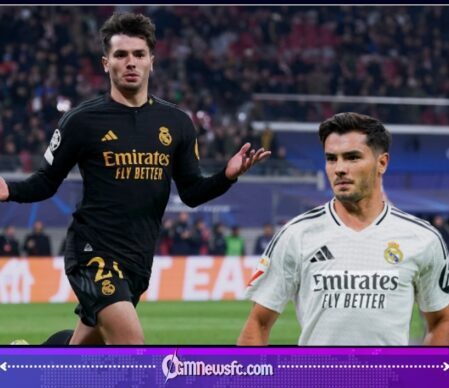
Brahim Diaz and Morocco have found themselves at the center of a football narrative that refuses to stay in its lane, as the Real Madrid star openly expressed excitement about working with Mourinho at the Santiago Bernabéu. With Morocco progressing into the World Cup quarterfinals, the timing of these comments has added a layer of intrigue, tension, and mild chaos to an otherwise disciplined campaign.
Quarterfinal Momentum Meets Madrid Daydreams
Brahim Diaz has been one of the standout leaders in the Morocco squad, even without filling the scoresheet. His influence has been more emotional and tactical, guiding the team through tight moments in their impressive World Cup run.
Yet the keyword Brahim Diaz has now become as much about the future as the present, with his remarks about Mourinho at Real Madrid dominating headlines. Inside the Morocco camp, sources suggest the focus remains intact, but outside noise continues to swirl like a stubborn tactical debate.
Morocco, meanwhile, have built their success on discipline, compact structure, and rapid transitions—qualities Diaz has embodied even while being dragged into transfer speculation. The contrast between his current responsibility and future imagination is becoming one of the tournament’s quiet subplots.
Mourinho Talk, Madrid Echoes, and World Cup Reality Checks
The Mourinho angle has inevitably revived discussions about Real Madrid’s long-term planning, with Brahim Diaz positioned as a potential creative pillar in any future rebuild. While nothing official has materialized, the mere mention of Mourinho has a habit of turning whispers into headlines.
Morocco’s technical staff reportedly view Diaz’s professionalism as unaffected, even if media narratives attempt to pull him into a parallel storyline. In football terms, it is the classic case of a player being everywhere at once—on the pitch in one continent, and in transfer fantasies in another.
From a broader football context, Morocco’s rise at major tournaments continues to reshape perceptions of African football on the global stage. Their 2022 heroics were not a one-off, and their current quarterfinal push reinforces that their success is structural, not accidental. Diaz’s role, therefore, sits at the intersection of national pride and club-level curiosity.
Morocco now face a defining stage of their campaign, where focus will matter more than headlines. Whether Brahim Diaz continues to be discussed for his leadership or his Madrid future, his performance in the coming matches will likely decide which narrative survives the tournament’s pressure cooker.