










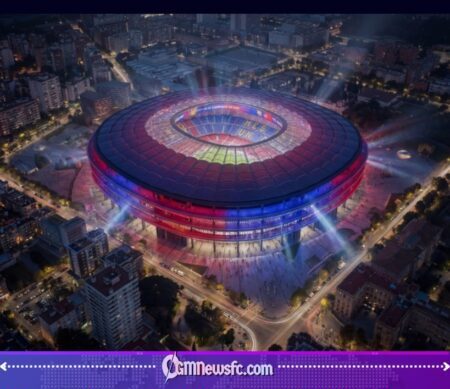
FC Barcelona appear to be writing a new chapter in what is fast becoming football’s longest home makeover story, with fresh plans suggesting that the iconic Camp Nou could face yet another temporary closure.
The stadium, already under heavy renovation as part of the ambitious Espai Barça project, had only recently begun welcoming fans back in limited capacity. However, new construction phases—particularly those involving complex structural upgrades—are expected to disrupt operations once again.
For supporters, it’s beginning to feel like moving back into your house while the builders are still arguing over where to place the roof. Technically possible, but not exactly comfortable.
Why Another Closure Is on the Table
The primary reason behind the proposed shutdown lies in the most technically demanding phase of the project: installing a full stadium roof. Unlike minor upgrades, this stage involves heavy engineering work that cannot safely coexist with tens of thousands of fans attending matches.
Club officials have reportedly concluded that a temporary closure may be unavoidable if construction is to proceed efficiently and safely. In other words, even Barcelona’s famous attacking style cannot outplay basic physics and construction logistics.
Additionally, the scale of machinery, noise, and safety restrictions required for this phase makes partial operation impractical. It’s one thing to dodge defenders; it’s quite another to dodge cranes mid-match.
Espai Barça: A Vision Beyond Football
The ongoing transformation of Camp Nou is part of the larger Espai Barça initiative—an ambitious redevelopment plan designed to modernize the club’s entire sporting infrastructure.
Once completed, the new stadium is expected to:
Expand capacity to over 100,000 spectators
Introduce cutting-edge hospitality and VIP experiences
Generate significantly higher commercial revenue
The project is not just about aesthetics; it is a strategic financial move aimed at restoring Barcelona’s long-term economic strength. Simply put, this is less about new seats and more about new income streams.
Camp Nou: A Timeline That Keeps Stretching
Originally scheduled for completion much earlier, the Camp Nou renovation has faced multiple delays, pushing the timeline further into the future.
Work began in 2023, with initial expectations of a swift return. Instead, the process has evolved into a phased reopening, partial usage, and now—potentially—another closure. Full completion is now projected closer to 2026 or even 2027.
For fans keeping track, the renovation timeline has started to resemble a football match with endless stoppage time. The whistle, it seems, is not coming anytime soon.
Life Away From Home—Again
During previous construction phases, Barcelona temporarily relocated to the Estadi Olímpic Lluís Companys, a venue that, while historic, lacks the scale and atmosphere of Camp Nou.
If another closure goes ahead, the club may once again be forced to seek alternative venues. Options include returning to Montjuïc or exploring smaller stadium solutions, though each comes with financial and logistical compromises.
For a club of Barcelona’s stature, playing away from Camp Nou is more than an inconvenience—it’s a reminder that even giants sometimes have to pack up and move while renovations are underway.
Fans Caught Between Excitement and Exhaustion
Barcelona supporters have responded with a mixture of anticipation and fatigue. On one hand, the promise of a world-class stadium is undeniably exciting. On the other, repeated delays and relocations have tested their patience.
Images of cranes towering over unfinished sections of the stadium have become a familiar sight, symbolizing both progress and the long road ahead. For many fans, the dream is clear—but the waiting feels endless.
Still, loyalty remains strong. After all, if there’s one thing football fans are known for, it’s sticking with their club through thick, thin, and apparently, ongoing construction.
Short-Term Disruption, Long-Term Ambition
Barcelona’s leadership continues to frame the project as a necessary step toward future success. A fully modernized Camp Nou is expected to significantly boost revenue, enhance fan experience, and reinforce the club’s global standing.
The temporary inconveniences—closures, relocations, and reduced capacity—are being positioned as sacrifices for a greater reward. Whether fans fully agree may depend on how long “temporary” ends up being.
For now, the message is clear: Barcelona are building for the future, even if it means putting the present on hold.