









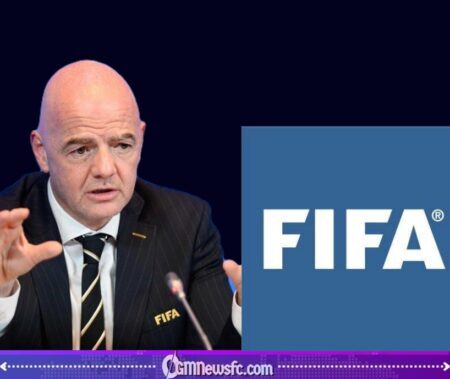
South America’s football governing body, CONMEBOL, has formally expressed unanimous support for Gianni Infantino should he decide to seek re-election for a fourth term as president of FIFA. The endorsement, announced on Thursday, marks the first official backing from a continental federation ahead of the 2027–2031 electoral cycle.
Although Infantino has not yet confirmed his candidacy, the statement signals early momentum for the Swiss administrator, who has led FIFA since 2016. His tenure has been defined by sweeping reforms, expanded global competitions, and continued debate over the direction of international football governance.
Early Endorsement Signals Strategic Alignment
CONMEBOL’s declaration of support reflects a strong institutional alignment between South American football leadership and FIFA’s current administration. The confederation’s council stated it had “unanimously expressed its support,” underscoring a rare show of unity among its member associations.
CONMEBOL President Alejandro Domínguez praised Infantino’s leadership, citing his “continued commitment to the development of South American football” and his influence on the global stage. The endorsement may also signal confidence in FIFA’s ongoing investment and competition opportunities for the region.
As the first confederation to publicly back Infantino ahead of a potential campaign, CONMEBOL’s position could influence other continental bodies, particularly in Africa and Asia, where FIFA development programs have also been expanded in recent years.
Infantino’s Tenure: Expansion and Reform
Since assuming office in 2016, Infantino has overseen a period of significant structural change within FIFA. He succeeded Sepp Blatter following a turbulent era marked by governance scandals, positioning himself as a reform-minded leader.
Among his most notable initiatives is the expansion of the FIFA World Cup, with the upcoming tournament in North America set to feature 48 teams for the first time. Similarly, the FIFA Women’s World Cup expanded to 32 teams in 2023, reflecting a broader push toward inclusivity and global participation.
Infantino has also championed new competitions and commercial strategies aimed at increasing FIFA’s revenues and global footprint. Supporters argue these measures have strengthened football’s reach, particularly in emerging markets.
Criticism Over Governance and Calendar Pressures
Despite these achievements, Infantino’s leadership has not been without criticism. Concerns have been raised about governance transparency, decision-making processes, and the concentration of power within FIFA’s executive structures.
Another recurring issue is fixture congestion, as expanded tournaments and additional competitions have placed increasing demands on players and domestic leagues. Critics argue that the growing international calendar risks overburdening athletes and disrupting club competitions.
These concerns remain central to debates about FIFA’s long-term strategy, and they are likely to feature prominently should Infantino confirm his intention to seek another term.
Looking Ahead to 2027
With the next FIFA presidential election scheduled for 2027, the political landscape of global football is gradually taking shape. CONMEBOL’s early endorsement positions Infantino as a strong संभाव candidate, even before he has formally declared his intentions.
The coming months are expected to reveal whether other confederations follow suit or whether alternative candidates emerge to challenge his leadership. For now, Infantino’s track record and institutional backing place him in a favourable position.
Ultimately, the decision will rest on the broader FIFA membership, whose votes will determine whether continuity or change defines the next chapter of world football governance.