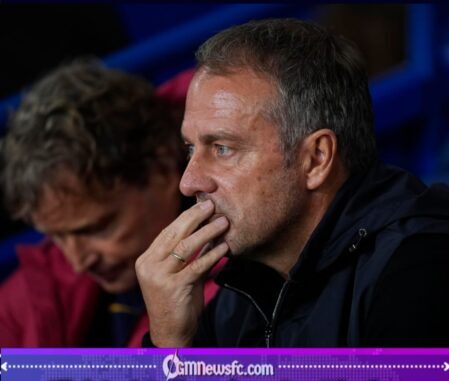








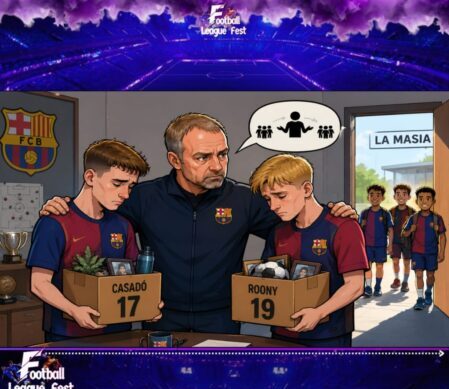
Hansi Flick has reportedly delivered one of those uncomfortable football conversations that managers secretly wish came with a “skip dialogue” button, telling Marc Casadó and Roony Bardghji about plans for their futures at Barcelona. “It wasn’t easy for me to speak with Casadó and Roony about their future, but I did it,” Flick said in the supplied scoop, explaining that such decisions happen at big clubs, particularly at Barcelona, where space must be created for La Masia talents. The timing is significant: recent reports say Casadó and Bardghji have been left out of Barcelona’s travelling squad for a pre-season tournament as their departures become increasingly likely.
THE BARÇA SQUADROOM HAS BECOME A GAME OF MUSICAL CHAIRS
For Casadó, the situation represents a particularly striking twist. The midfielder was officially part of Barcelona’s first-team squad and wore the No. 17 shirt, while Bardghji was also listed among Flick’s first-team options. Yet football has a brutal way of reminding players that having a shirt number does not necessarily mean having a permanent seat at the table. Reports now indicate that Casadó is close to a move away, while Bardghji is attracting interest from clubs elsewhere in Europe.
The satirical irony is that Barcelona’s squad planning now resembles a particularly aggressive game of musical chairs: just when somebody thinks they have found a seat, the music stops and the manager announces that La Masia needs the chair. Flick’s explanation is hardly mysterious. Barcelona have invested heavily in their academy identity, and the club’s first-team structure already includes young products such as Pau Cubarsí and Marc Bernal, while several other academy prospects are competing for opportunities. The message appears simple: promising youngsters must be given a pathway, even if that pathway occasionally passes directly through the exit door of another promising youngster.
LA MASIA WAITING ROOM GETS BUSIER
The decision also comes against a backdrop of significant squad movement. Barcelona have been reshaping their team while Flick prepares for another demanding campaign, and reports indicate that the club’s summer activity could dramatically alter the balance between established stars, recent signings and academy graduates. Flick himself has warned that the unusual pre-season schedule and squad changes could mean Barcelona need time before reaching their best level.
For Bardghji, the story is especially curious because he only arrived from Copenhagen before the 2025/26 campaign and initially impressed enough to remain around Flick’s first-team group rather than simply disappearing into the reserve setup. Now, however, the youngster’s Barcelona adventure could be heading toward another chapter elsewhere. In classic football fashion, the club can simultaneously believe in a player’s potential and decide that his development would be better served away from Camp Nou. That is the sort of contradiction that makes transfer windows so entertaining—and agents so busy.
Barcelona therefore appear to be balancing two competing ideas: protecting the future by promoting La Masia and managing the present by making difficult squad decisions. Flick’s reported conversation with Casadó and Bardghji underlines the human side of that process, because behind every “squad adjustment” is a player being told that his immediate plans may need adjusting too. For supporters, the bigger question is whether the academy pathway will ultimately produce the next generation of Barcelona stars—or whether some of today’s young players will become tomorrow’s “we should never have let him leave” stories.
As the summer reshuffle continues, Casadó and Roony’s situations are worth watching closely, particularly with reports of negotiations and possible exits already gathering momentum. For Barcelona, the challenge will be making room for La Masia without creating holes elsewhere in the squad; for Flick, it will be managing the footballing and human consequences of those decisions. FLF OGM News FC will continue watching this developing story, because at Barcelona, the door marked “La Masia” may be opening—but another door may be closing just as quickly.