









France’s attacking evolution has once again become the defining storyline of Les Bleus’ World Cup campaign after Didier Deschamps’ rejuvenated side overcame Morocco with a convincing display that underlined just how dramatically the French national team has transformed since the last tournament. While the scoreline mirrored France’s previous World Cup knockout victory over the Atlas Lions, the performance told a completely different story, raising intriguing questions about whether this more adventurous French side is now better equipped to conquer the tournament’s biggest challenges.
Attacking Evolution
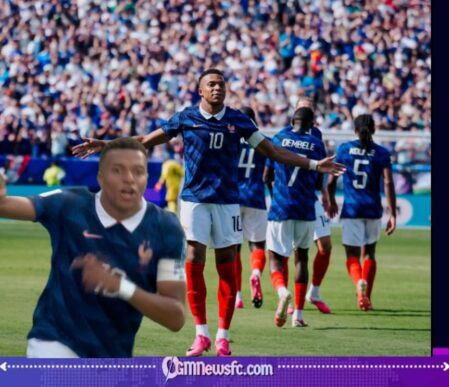
France’s attacking evolution was evident from the opening whistle as Deschamps abandoned the conservative, defence-first blueprint that guided much of his previous tournament success in favour of an aggressive pressing game and fluid attacking movement. Unlike the tightly contested 2022 World Cup semi-final, where France relied on efficiency rather than dominance, Les Bleus repeatedly forced Morocco deep into their own half through relentless pressure led by Kylian Mbappé, Ousmane Dembélé and the dynamic attacking unit. Although Morocco goalkeeper Yassine Bounou frustrated France for long spells, the French side continued to create opportunities until Mbappé finally broke the deadlock before Dembélé added a second to secure victory.
Morocco, missing key attacking presence Ismael Saibari, struggled to escape France’s pressing intensity and rarely threatened the French defence throughout the contest. Midfielder Manu Koné delivered one of his finest international performances, strengthening his case for a regular starting role, while Adrien Rabiot later remarked that France never truly felt endangered whenever possession shifted to the Atlas Lions. Despite concerns over William Saliba’s fitness and France’s occasionally wasteful finishing, Deschamps’ side maintained complete control for most of the encounter, reinforcing confidence ahead of a far more demanding semi-final challenge.
Deschamps’ Reinvention
France’s attacking evolution reflects a broader tactical transformation that has gradually taken shape under Didier Deschamps. Long regarded as one of international football’s most pragmatic coaches, Deschamps has increasingly embraced a high-pressing, possession-flexible system that allows creative players greater attacking freedom while maintaining the defensive organisation that has defined his tenure. The partnership between Mbappé, Dembélé and Michael Olise has produced one of the tournament’s most dangerous attacking combinations, although France’s inability to consistently convert chances remains an area requiring improvement against stronger opposition.
The victory also arrives after an emotionally charged period for the French camp following their bruising encounter with Paraguay, a match overshadowed by controversial officiating and racist abuse directed at Mbappé by Paraguayan senator Celeste Amarilla. Deschamps deliberately shifted focus before facing Morocco, insisting that his players concentrate solely on football rather than external distractions. With potential clashes against attacking heavyweights such as Spain or Belgium looming, France’s improved tactical flexibility could prove decisive. However, the next stage will provide the clearest measure yet of whether this attacking philosophy can deliver the ultimate reward or whether greater clinical finishing will be required when opportunities become scarce.
France’s attacking evolution has already reshaped perceptions of a team once criticised for prioritising results over entertainment. By combining defensive discipline with an increasingly fearless attacking approach, Deschamps has positioned Les Bleus among the strongest contenders for World Cup glory. OGM News will continue monitoring France’s progress as the tournament enters its decisive stages, where every tactical decision—and every missed opportunity—could determine whether this remarkable transformation ends with another world title.