










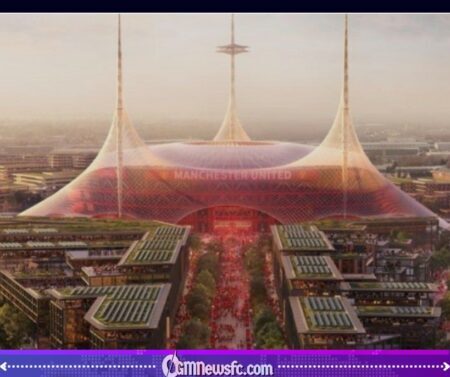
For decades, Manchester United have called Old Trafford the “Theatre of Dreams.” But now, the club is quietly scripting a sequel—one that could see a futuristic, 100,000-seat arena emerge as the crown jewel of global football.
The ambition is bold: build a stadium big enough, modern enough, and iconic enough to host the final of the FIFA Women’s World Cup 2035. If achieved, it would mark not just a new chapter for United, but a symbolic leap for women’s football on one of the sport’s grandest stages.
Yet beneath the glossy renderings and political optimism lies a project still in its early innings. Club officials have stressed that while the vision is alive, the groundwork—literally and figuratively—has only just begun.
Timeline Tightrope: Racing Against the Calendar
Time, as always in mega projects, is both ally and enemy. Early estimates suggest the stadium could take four to five years to build, but only after one to two years of preparatory work involving planning approvals, financing structures, and land negotiations.
This means that if everything goes according to plan (a phrase construction veterans rarely say with a straight face), the stadium could open sometime in the early 2030s—just in time to impress FIFA inspectors ahead of 2035.
However, delays in any phase—be it bureaucratic approvals or funding hiccups—could push completion dangerously close to the tournament deadline. In football terms, United are attempting a last-minute winner… from inside their own half.
Manchester United £2 Billion Gamble: Investment Meets Ambition
The proposed development is not just about football—it is a £2 billion regeneration project aimed at transforming the wider Trafford area into a bustling hub of commerce, entertainment, and infrastructure.
Local authorities, including Greater Manchester’s leadership, have thrown their weight behind the idea, envisioning a “Wembley of the North.” The comparison is no accident. Wembley Stadium currently dominates England’s major event hosting landscape, and any challenger must match its prestige and capacity.
Private investors are reportedly interested, but no full financial blueprint has been publicly finalized. Until then, the project remains a tantalizing concept—half business plan, half football fantasy.
World Cup Dreams: Why 2035 Matters
The United Kingdom is widely expected to host the 2035 Women’s World Cup, a tournament set to expand to 48 teams, reflecting the explosive growth of the women’s game.
For Manchester United, securing the final would be more than a logistical win—it would be a cultural statement. Hosting the biggest match in women’s football would signal the club’s commitment to inclusivity and global relevance beyond the men’s game.
Still, competition is fierce. Wembley remains the front-runner, boasting proven infrastructure, recent tournament pedigree, and FIFA’s familiarity. For United’s new stadium to leapfrog it, the venue must not only be completed but also fully operational and battle-tested.
Challenges on the Ground: More Than Just Bricks and Steel
Despite the optimism, several hurdles remain. Land acquisition issues are yet to be fully resolved, and large-scale urban redevelopment projects often encounter unexpected resistance—from legal disputes to environmental concerns.
Funding, too, is a delicate balancing act. With football finances increasingly scrutinized, committing billions to infrastructure requires careful navigation of regulations and investor confidence.
And then there’s the simple matter of execution. Stadium construction at this scale is notoriously complex. Even the best-laid plans can unravel faster than a defender facing a prime winger on a wet pitch.
Tradition vs Transformation: What Happens to Old Trafford?
One of the more emotional subplots in this story is the fate of Old Trafford itself. Renovation has long been debated, but the scale of modernization required has led many to conclude that a new build may be the more practical option.
For fans, this raises questions that go beyond architecture. Old Trafford is steeped in history—echoes of legends, triumphs, and heartbreaks linger in its stands.
Replacing it would be like rewriting a classic novel: exciting, perhaps necessary, but not without controversy. United must balance innovation with heritage, ensuring that whatever replaces—or complements—the Theatre of Dreams carries forward its soul.
Manchester United Final Whistle: Dream Big, Build Bigger
Manchester United’s stadium ambition is as audacious as a 90th-minute comeback—and just as uncertain. The vision of hosting the 2035 Women’s World Cup final is alive, backed by political support and global relevance.
But ambition alone does not pour concrete or sign cheques. The coming years will determine whether this project becomes a landmark achievement or another “what could have been” in football’s long history of grand plans.
For now, the dream stands—bold, towering, and just a little bit precarious.