









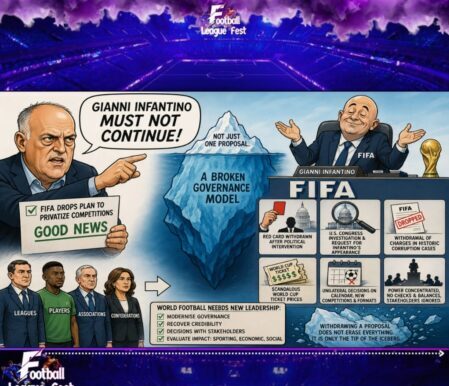
Governance: European football has been handed another political-style showdown after Javier Tebas declared that Gianni Infantino should no longer remain FIFA President, arguing that the withdrawal of FIFA’s controversial proposal to privatize some of its competitions does not resolve what he described as deeper governance failures. While the abandoned proposal has been welcomed by many stakeholders, Tebas insists it merely scratches the surface of wider concerns surrounding leadership, accountability and decision-making within world football. His remarks arrive as FIFA continues to face criticism over several contentious issues that have dominated football discussions in recent years.
A Victory Celebration Ends Before the Whistle
In what could only happen in football politics, some observers were already preparing victory parades after FIFA reportedly stepped away from its privatization proposal. Tebas, however, arrived with the football equivalent of a VAR review, reminding everyone that cancelling one controversial idea does not automatically award a trophy for good governance.
His criticism stretches beyond the privatization debate. He pointed to allegations involving political influence over disciplinary matters, questions raised by lawmakers in the United States, criticism surrounding World Cup ticket pricing, and complaints that major football decisions—including competition formats and the international calendar—have often been introduced without broad consultation among leagues, clubs, players and other stakeholders. These issues have all fueled continuing debate over FIFA’s leadership and governance.
The Iceberg Below the Surface
According to Tebas, the real concern is a governance structure that centralizes authority while limiting meaningful checks and balances. In his view, football’s future should be shaped through consultation, transparency and careful evaluation of sporting, financial and social consequences rather than unilateral decision-making. His call for new leadership reflects growing demands from parts of the football community for institutional reforms.
Satirically speaking, football’s biggest competition may no longer be the World Cup but the annual championship for “Most Dramatic Governance Debate.” Every time one controversy appears to disappear, another seems ready to warm up on the touchline. If football governance were a league table, critics joke that controversy would already have secured qualification for next season’s continental competition.
The debate surrounding FIFA’s leadership is unlikely to disappear anytime soon. Whether Tebas’ latest comments inspire broader institutional reforms or simply ignite another round of football politics remains to be seen. FLF OGM News FC will continue monitoring developments as stakeholders across world football weigh the future direction of the game’s governing body and any further responses from FIFA’s leadership.