










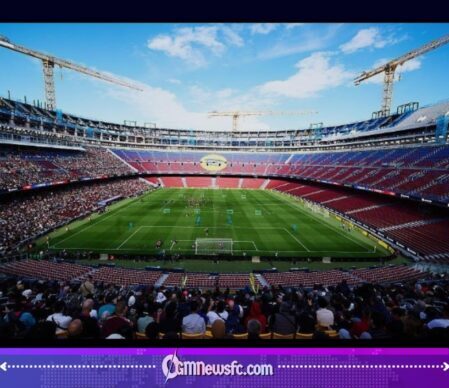
Camp Nou has become the center of a financial drama that few Barcelona supporters expected to rival the tension of a Champions League knockout tie. What began as a transformative vision under the ambitious Espai Barça project is now facing a fresh obstacle: the money earmarked to complete the famous stadium redevelopment appears to be running out before the final whistle has blown.
Camp Nou Dream Turns Into Financial Nightmare for Laporta
Barcelona’s leadership, headed by Joan Laporta, has reportedly acknowledged that the €1.45 billion financing package originally secured for the project is no longer sufficient to complete the full Camp Nou and Espai Barça redevelopment. Club officials are now considering seeking approval from members to increase the available credit line, a move that could become a major talking point at a future assembly of club members.
The situation is not entirely surprising in the world of mega-projects. Large stadium redevelopments frequently encounter delays, unexpected engineering challenges, and inflation-driven increases in construction costs. Reports suggest the budget deviation could reach several hundred million euros, although no final figure has been officially confirmed. As construction continues on the stadium’s upper tiers and remaining facilities, the club finds itself balancing ambition with arithmetic—a contest even Barcelona’s legendary midfielders might struggle to control.
Barcelona’s Wallet Requests a Substitution During Camp Nou Rebuild
The broader Espai Barça vision extends far beyond simply renovating Camp Nou. The project includes commercial developments, upgraded facilities, and infrastructure designed to generate substantial future revenues. Barcelona has consistently argued that the completed complex will significantly increase annual income through hospitality, sponsorships, events, and premium seating opportunities. Previous financial restructuring efforts were specifically designed to spread repayment obligations over a longer period while maximizing future revenue potential.
However, the latest developments highlight the risks attached to long-term infrastructure investments. Rising material costs, inflationary pressures, and construction delays have affected major projects worldwide, and Barcelona appears to be confronting the same realities. Reports indicate that certain elements of the wider Espai Barça development remain unfinished, while final completion dates have shifted beyond some earlier expectations. The club’s challenge now is ensuring that today’s additional borrowing does not undermine tomorrow’s financial recovery.
For now, Camp Nou remains both Barcelona’s greatest symbol of future prosperity and its most expensive ongoing project. Whether the extra financing becomes a temporary inconvenience or a long-term burden will depend on how effectively the club completes the Espai Barça vision and converts concrete, steel, and patience into sustainable revenue. One thing is certain: the construction cranes are not the only things doing heavy lifting in Barcelona right now.