








Balogun has become the center of an escalating confrontation that now threatens to reshape the balance of power in global football. UEFA’s extraordinary condemnation of FIFA over its decision to lift United States striker Folarin Balogun’s suspension before a crucial World Cup knockout match has transformed what appeared to be a disciplinary dispute into a high-stakes political battle between football’s two most influential governing bodies. The controversy has intensified scrutiny over FIFA’s governance, competitive integrity, and its increasingly strained relationship with Europe’s football establishment.
Balogun Controversy
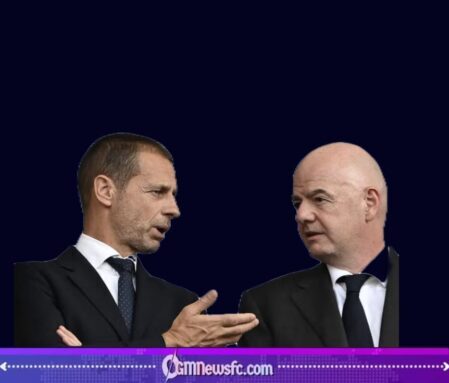
UEFA dramatically escalated tensions after accusing FIFA of crossing “a red line” by overturning Balogun’s suspension ahead of the United States’ last-16 clash against Belgium. The European governing body described the decision as “incomprehensible and unjustifiable,” arguing that it undermines the integrity of the competition and raises serious questions about consistency in the application of disciplinary rules. UEFA President Aleksander Čeferin publicly backed the strongly worded statement, signaling that the dispute extends well beyond a single player and reflects growing institutional frustration with FIFA’s decision-making processes.
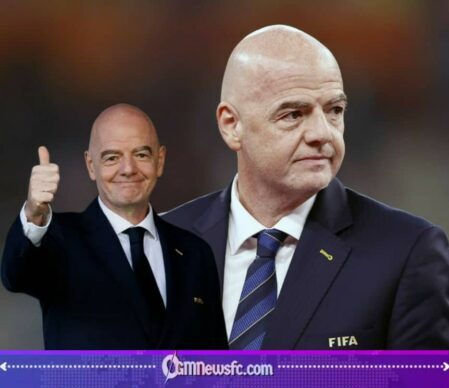
Behind the public criticism lies a broader rivalry that has intensified over recent years. FIFA President Gianni Infantino and Čeferin have repeatedly clashed over the future of international football, particularly regarding FIFA’s ambitions to further expand the Club World Cup. UEFA officials reportedly held extensive internal discussions following the Balogun decision, while Belgium’s football federation continued exploring legal avenues after FIFA rejected objections to the suspension reversal. The possibility of proceedings before the Court of Arbitration for Sport has further increased the stakes, potentially turning the disciplinary dispute into a landmark legal battle with consequences extending beyond the current tournament.
Power Struggle
The Balogun dispute reflects years of mounting institutional rivalry between UEFA and FIFA over football’s commercial future, governance, and control of the international calendar. FIFA’s expansion of the Club World Cup has been viewed by many within UEFA as a direct challenge to the financial dominance of the Champions League, Europe’s most lucrative club competition. UEFA generates billions of euros annually through its elite club tournaments, while FIFA has sought to diversify revenue beyond the men’s World Cup by expanding global club competitions and increasing commercial opportunities. These competing priorities have increasingly placed both organizations on opposing sides of football’s most consequential policy debates.
Relations between the governing bodies have deteriorated through a series of highly visible disagreements. European delegates staged a walkout during a FIFA Congress in Paraguay after Infantino’s delayed arrival following meetings with world leaders, including current President Donald J. Trump and Saudi Crown Prince Mohammed bin Salman. Although both organizations appeared to maintain a temporary truce ahead of upcoming leadership elections, the Balogun controversy has exposed underlying tensions that never fully disappeared. Analysts note that disputes over scheduling, player workload, commercial expansion, and governance reforms are likely to intensify as FIFA begins negotiations on the post-2030 international calendar, including preparations for the 2034 World Cup in Saudi Arabia.
The Balogun controversy is unlikely to conclude with a single disciplinary ruling. Whether through legal proceedings, political negotiations, or future governance reforms, the dispute has exposed deeper divisions over who ultimately shapes the future of world football. OGM News will continue monitoring developments, including any legal action, UEFA’s next strategic response, and FIFA’s handling of disciplinary authority as the conflict evolves.