








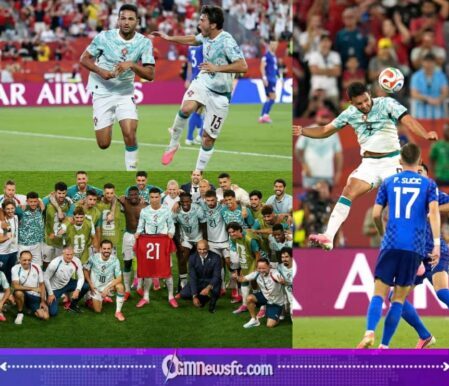
If Goncalo Ramos ever arrives late to dinner again, Portugal might simply thank him instead of complaining. The forward struck in the 94th minute after Cristiano Ronaldo scored his first FIFA World Cup knockout-stage goal, completing a dramatic comeback against Croatia and sending Portugal into the last 16. Just when supporters were mentally preparing for extra time—and perhaps a nationwide supply shortage of heart medication—Ramos reminded everyone that football’s stopwatch often enjoys one final joke.
Goncalo Ramos Told the Referee: “Don’t Blow Yet!” and Portugal Listened
Portugal recovered from falling behind to produce a determined response against a Croatian side that once again demonstrated remarkable organisation and tactical discipline. Ronaldo’s equaliser carried enormous historical significance, ending one of the few statistical gaps in his extraordinary international career. Yet as celebrations began to focus on that milestone, Ramos quietly prepared the evening’s final act.
The decisive goal arrived deep into stoppage time, rewarding Portugal’s persistence and willingness to keep attacking until the final whistle. Croatia defended courageously throughout much of the contest but were ultimately punished by one lapse in concentration. It was the kind of ending that reminds football supporters never to leave the television before the referee actually blows for full time—even if dinner is getting cold.
Ramos Arrived So Late Even the Stadium Clock Looked Confused
Portugal’s victory continues a pattern of resilience that has often defined successful international tournament campaigns. Recent major competitions have repeatedly shown that knockout football is decided not only by tactical quality but also by squad depth, physical endurance and the ability to seize decisive moments. Ramos has increasingly demonstrated that he can provide exactly that impact, complementing experienced stars like Ronaldo while representing the next generation of Portuguese attacking talent.
For Croatia, the defeat is another reminder of how unforgiving elite tournament football can be. Their experienced midfield once again controlled long spells of possession, but creating dominance is only half the challenge; protecting it until the final whistle is equally important. Portugal, meanwhile, will view this comeback as both encouragement and a warning. Leaving decisive goals until stoppage time creates unforgettable headlines, but it also gives coaches a few extra grey hairs that no tactical notebook can explain away.
Goncalo Ramos and Portugal now move into the last 16 carrying renewed belief after a victory built on persistence rather than perfection. Ronaldo’s long-awaited knockout milestone will rightly be remembered, but Ramos ensured the night’s lasting image belonged to a late winner that transformed history into qualification. If Portugal continue combining experience with emerging talent, they may yet discover that their most dangerous weapon is not simply skill—but the stubborn refusal to accept that a match is over until the referee says so.