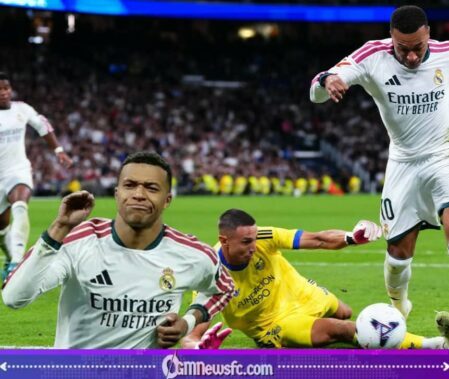










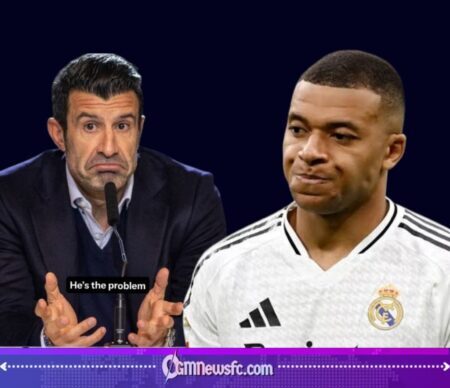
Ego: Former Luis Figo has delivered the kind of football opinion guaranteed to shake both Paris and Madrid at the same time, claiming that Paris Saint-Germain F.C. became stronger as a team after Kylian Mbappé departed for Real Madrid C.F.. According to Figo, PSG now looks more disciplined, united, and tactically balanced, while Madrid appear trapped in a complicated football experiment involving too many stars, too much pressure, and an alarming amount of Ego floating around the dressing room like expensive cologne.
The remarks immediately triggered debate because they attack one of football’s favourite modern obsessions: superstar recruitment. Mbappé’s arrival at Madrid was presented as the final piece of a galáctico puzzle expected to dominate Europe instantly. Instead, critics have increasingly questioned whether the team sacrificed balance for celebrity power. Somewhere inside Madrid’s tactical meetings, several defenders are probably still searching for emotional support after another chaotic counterattack.
Ego and the Galáctico Pressure Machine
Figo’s comments focus heavily on the contrast between PSG’s current collective structure and Madrid’s apparent struggle to harmonize multiple attacking superstars. The former Ballon d’Or winner argued that PSG now resemble a more complete football team where players fight together for results rather than for individual spotlight moments. That observation reflects a broader shift many analysts have noted in PSG’s tactical approach since Mbappé’s departure, with greater emphasis placed on pressing, positional discipline, and shared responsibility.
At Madrid, however, the conversation has become more uncomfortable. The arrival of Mbappé added another elite attacking presence to a squad already filled with high-profile stars expected to lead matches and dominate headlines. Managing talent is one thing; managing Ego is another sport entirely. Every missed pass now becomes a conspiracy theory, every tactical substitution becomes a social media tribunal, and every frustrated body language clip receives the cinematic treatment online within minutes.
Ego, Identity, and the Modern Football Circus
Beyond the immediate headlines, Figo’s criticism touches on a wider issue affecting elite football clubs across Europe. Modern teams often chase commercial appeal and superstar branding alongside sporting success, but history repeatedly shows that balance and tactical clarity still matter more than assembling a collection of famous names. Several recent Champions League winners succeeded not because they had the most glamorous squad, but because they operated with cohesion and clearly defined roles.
PSG’s recent progress has therefore intensified discussion surrounding football identity. For years, the French giants were mocked for relying too heavily on individual brilliance despite enormous spending. Ironically, some observers now believe the team looks more functional and emotionally connected without constantly revolving around one global superstar. Meanwhile, Madrid continue facing scrutiny over how to distribute attacking responsibilities among several elite players without creating tactical confusion or internal frustration. In football terms, too many kings can sometimes turn the kingdom into a weekly argument.
Mbappé himself remains one of the world’s finest players, and even Figo acknowledged that reality clearly. Yet football history has always been filled with talented squads that looked unstoppable on paper before reality introduced concepts like chemistry, sacrifice, and defensive tracking. Madrid supporters will still expect trophies, brilliance, and dominance next season, but Figo’s warning about Ego ensures every setback will now face even greater scrutiny. Until Madrid fully solve the balance between superstar status and collective identity, the debate will continue roaring louder than the Bernabéu crowd after a missed sitter.