









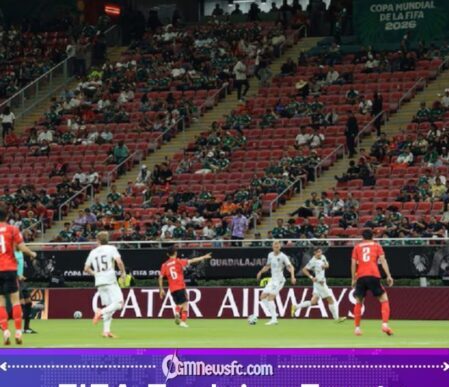
The FIFA debate over Empty Seats has erupted into one of the earliest controversies of the World Cup after South Korea’s dramatic 2-1 victory over Czechia was overshadowed by a stadium optics problem that television cameras simply could not ignore. Official attendance figures suggested a near-capacity crowd in Guadalajara, yet viewers around the world were greeted by visible patches of vacant seating. FIFA’s explanation—that many supporters were standing in concourse areas rather than occupying their seats—has only deepened the intrigue, leaving football fans wondering whether the tournament’s biggest comeback happened on the pitch or in the attendance report itself.
FIFA Attendance Figures Questioned After Sparse Crowd Scenes
The controversy began after South Korea overturned a deficit to defeat Czechia 2-1 in a Group A encounter that should have been remembered for its football. Instead, attention shifted to the appearance of Empty Seats throughout the stadium. FIFA reported an attendance of 44,985, only a few hundred below the venue’s official capacity, and explained that attendance figures are based on tickets scanned and spectators within the stadium footprint rather than on visible seat occupancy.
Critics were unconvinced. Television broadcasts repeatedly showed unoccupied sections, prompting widespread debate on social media. FIFA argued that many fans chose to remain in concourse areas during the match, but opponents questioned whether a stadium that appeared partially empty should be presented as virtually full. The situation produced an unfortunate public-relations own goal, particularly because the governing body had spent months promoting unprecedented demand for the tournament.
Fans Priced Out While FIFA Insists Stadium Was Nearly Full
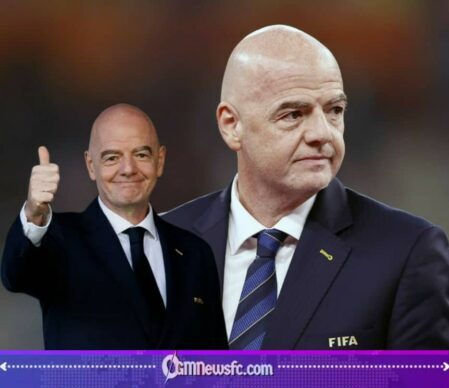
The Empty Seats controversy cannot be separated from the wider debate over ticket pricing. FIFA president Gianni Infantino has defended the organisation’s pricing model, arguing that ticket costs are comparable to those charged at major sporting events across North America. FIFA has also highlighted strong overall sales figures, reporting more than six million tickets sold and demand that allegedly exceeded expectations.
Yet fan organisations and supporters continue to argue that prices have climbed beyond the reach of many ordinary football followers. Reports indicate that some ticket categories cost several hundred dollars before travel, accommodation and other expenses are considered. Football Supporters Europe has warned that prices have risen dramatically compared with previous tournaments, while critics argue that football’s most inclusive event risks becoming an exclusive luxury experience. The sight of Empty Seats in a football-loving city such as Guadalajara has therefore become a powerful visual symbol in that debate.
South Korea will happily take the three points, while Czechia will focus on recovering from an opening defeat. FIFA, however, faces a different challenge. The governing body may have successfully counted the spectators who entered the stadium, but convincing the football public that what they saw was not what they saw could prove a much tougher assignment. OGM News FC will continue monitoring the FIFA and Empty Seats story as the tournament progresses and attendance figures come under increasing scrutiny.