








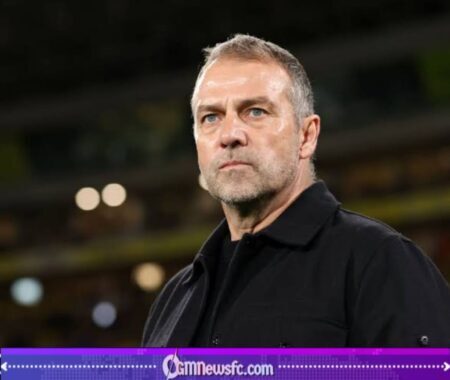
Hansi Flick has delivered a calm but revealing message about Barcelona’s summer plans, insisting that the club will maintain an “amazing squad” next season regardless of what happens in the transfer market. The statement sounded confident, reassuring, and slightly brave considering Barcelona’s recent habit of conducting transfer business with one eye on tactics and the other on the calculator. Yet beneath the optimism was a more intriguing admission: the club are already thinking seriously about life after Robert Lewandowski.
Flick’s comments about replacing Lewandowski were careful but impossible to ignore. The Barcelona manager explained that the club must search for a striker who fits their philosophy, before adding the wonderfully straightforward requirement that the player must also score goals. In fairness, football history suggests that second requirement has occasionally been overlooked by clubs hypnotized by pressing statistics and stylish passing maps. Flick appears determined not to make that mistake at Barcelona.
Flick Says Barça Need a Striker Who Fits Club Philosophy
The word “philosophy” has become central to Flick’s Barcelona project. Since arriving at the club, the German coach has emphasized aggressive pressing, fluid attacking movement, and positional discipline reminiscent of the club’s traditional identity. His ideal striker is not simply a penalty-box finisher but a mobile attacking focal point capable of linking play, creating spaces, and initiating pressure from the front. In modern Barcelona terms, the striker must score goals while also functioning like an extra midfielder, a defensive trigger, and occasionally a tactical chess piece.
Lewandowski still remains hugely important to that structure. Despite questions about age and long-term succession, the Polish striker continues to provide elite movement and decisive finishing in key moments. However, Barcelona are fully aware that elite forwards rarely maintain peak levels forever. Flick’s public acknowledgement of succession planning suggests the club wants to avoid the painful transition many European giants face when they cling too long to legendary goalscorers before suddenly realizing the future arrived six months earlier than expected.
Flick Backs Barça Squad Despite Uncertain Transfer Market
Barcelona’s transfer strategy will also be shaped heavily by financial limitations that continue to affect recruitment decisions. Reports surrounding the club in recent months have repeatedly highlighted wage concerns, registration challenges, and the need to balance sporting ambition with economic discipline. That reality makes Flick’s search for the ideal striker particularly complicated because Europe’s best young forwards now carry transfer fees large enough to make accountants consider career changes.
Additional reports around Barcelona’s recruitment plans suggest the club are prioritizing younger profiles capable of growing within Flick’s Philosophy rather than expensive superstar signings designed purely for marketing impact. The club’s sporting leadership reportedly values adaptability, pressing intensity, and tactical intelligence alongside finishing ability. In other words, Barcelona are searching for someone who can score 25 goals a season while also behaving like a tactical graduate student.
The wider context also matters. Across Europe, clubs are increasingly planning striker transitions earlier than before due to the physical demands of modern football. Flick appears determined to ensure Barcelona evolve gradually rather than collapse into emergency rebuilding mode. That may explain why discussions about Lewandowski’s eventual successor have started even while the veteran striker remains productive.
Barcelona supporters will now spend the coming months decoding every transfer rumour as if it were a classified government document. Flick’s Philosophy has officially entered the transfer market, and somewhere across Europe, several strikers are suddenly pressing harder just in case Barcelona are watching.