









The Messi story was supposed to end beneath the lights of Qatar with a golden trophy in his hands and football fans wiping away tears. Instead, the Argentine superstar appears determined to challenge one of sport’s oldest traditions: knowing when to leave. As the countdown to the 2026 World Cup gathers pace, the question hanging over football is no longer whether Messi achieved greatness—it is whether he is about to make history even harder to explain.
Argentina Prepare for 2026 World Cup as Messi Extends His Journey
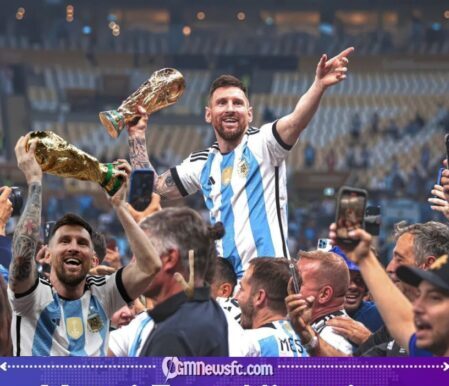
The remarkable aspect of Messi’s current journey is that he already delivered the ending most athletes spend entire careers chasing. Argentina’s victory in Qatar completed a narrative that had followed him for nearly two decades. After years of comparisons with Diego Maradona, Messi finally captured the one trophy critics claimed separated the two icons. The emotional scenes in Qatar appeared to provide the perfect conclusion, complete with leadership moments, crucial goals and an unforgettable march to the title.
Yet the Messi story stubbornly refuses to respect narrative conventions. Instead of retirement, the captain remains active for both Argentina and Inter Miami CF. While his role has evolved from relentless playmaker to selective destroyer of defensive structures, his influence remains significant. Argentina’s system increasingly accommodates his reduced mobility, with younger teammates supplying the energy while Messi supplies the moments that make coaches question their tactical diagrams. It is football’s version of outsourcing the running while keeping the genius in-house.
World Cup Dream Lives On as Messi Targets Another Triumph
The broader context makes this potential World Cup campaign especially intriguing. Argentina have built one of the most stable squads in international football under Lionel Scaloni. The foundations established through years of youth development, stretching back to the era of José Pékerman, continue to influence the senior national team. Several members of the current coaching staff emerged from that successful developmental culture, helping create continuity that many football powers envy.
The challenge, however, is obvious. Time remains undefeated. The 2026 tournament will present a higher physical demand, and Messi’s club football now takes place in a less demanding environment than the elite European competitions where he previously sharpened his edge. Skeptics fear a scenario in which the legend becomes a reminder of former brilliance rather than an active force. Supporters counter that Messi’s game has never depended solely on speed, and that football intelligence often survives long after physical advantages fade. If Argentina can surround him with enough energy, creativity and protection, the dream of a second World Cup title may be less fantasy than many assume.
The fascinating reality is that Messi has already secured his place among football’s immortals. Yet the possibility of lifting another World Cup trophy changes the conversation entirely. What once looked like an epilogue may become a second climax. Argentina’s captain is gambling that the perfect ending was not actually the ending at all. If he succeeds, football may need to rewrite one of its greatest stories—and perhaps even revisit its longest-running debate about who truly stands alone at the summit of the game.