










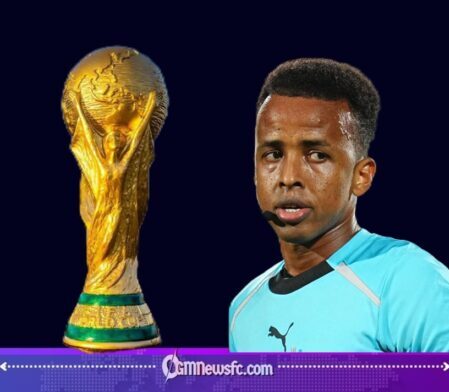
Omar Artan has become the unlikely centre of one of the most talked-about stories of the FIFA World Cup, and remarkably, he did it without blowing a whistle. The Somali official, who was preparing to become the first referee from his country to officiate at football’s biggest tournament, instead found himself at the heart of a controversy involving visas, immigration checks and growing calls for compensation. What should have been a career-defining moment has rapidly transformed into a debate over fairness, responsibility and whether football’s global promises can survive real-world politics.
Calls Grow for FIFA to Compensate Referee Excluded From Tournament
The immediate issue revolves around Omar Artan’s exclusion from the tournament after United States authorities denied him entry despite his selection as one of FIFA’s match officials. FIFA subsequently confirmed that he would not participate in training or officiating duties during the competition. The decision effectively ended his opportunity to make World Cup history and removed one of the tournament’s most inspiring narratives before it even began.
The compensation debate emerged after former FIFA referee and ex-PGMOL chief Keith Hackett argued that FIFA should provide a discretionary payment equivalent to what Artan would likely have earned during the tournament. Estimates discussed publicly suggest World Cup officials can earn substantial sums, making the financial loss almost as significant as the professional disappointment. In football terms, critics say FIFA appears to have watched the incident like a neutral spectator while one of its own officials was substituted before kickoff without touching the ball.
FIFA Under Pressure After Omar Artan’s World Cup Dream Is Halted
The backlash surrounding Omar Artan extends beyond one referee. Additional reporting indicates that concerns have been growing about visa restrictions and travel complications affecting participants connected to the World Cup. FIFA has maintained that immigration decisions are made solely by host governments and remain outside its authority, but that explanation has done little to calm critics who believe the organisation should play a more active role in protecting officials and participants selected for its flagship event.
Omar Artan’s credentials make the story even more striking. He was named Africa’s top male referee in 2025 and had already officiated at major continental competitions. Somali officials and football figures have described him as a symbol of achievement and inspiration for younger generations. His exclusion has therefore become more than an administrative issue; it has evolved into a discussion about merit, opportunity and whether sporting excellence can sometimes lose a match against bureaucracy.
For now, Omar Artan remains on the outside looking in while the World Cup moves forward. Yet the calls for compensation continue to gather momentum, and FIFA may find that this controversy lingers longer than many matches in the tournament itself. If football truly prides itself on fair play, the handling of Omar Artan’s case may become one of the most closely examined decisions of the entire competition.