




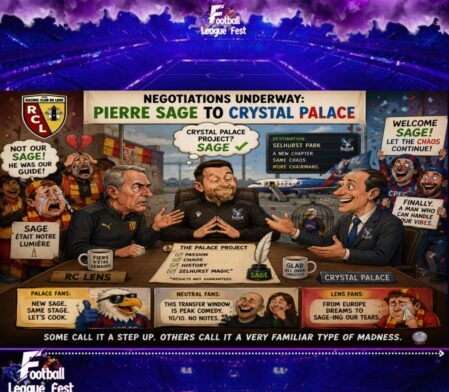
The Pierre Sage story has taken another intriguing turn, with negotiations continuing between Crystal Palace and RC Lens as the highly-rated French coach edges closer to becoming the club’s next head coach. The developing Palace Project has generated excitement in South London and anxiety in northern France, creating the sort of football drama that reminds everyone success often comes with unexpected side effects.
Sage Leaves Historic Season Behind to Test Premier League Blood Pressure
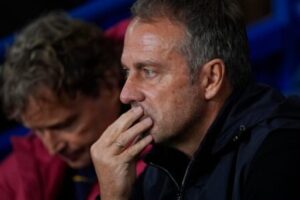
Crystal Palace’s interest in Pierre Sage did not emerge from nowhere. The 47-year-old coach has become one of the most sought-after managers in European football after transforming Lens during the 2025-26 campaign. Reports indicate that discussions between Palace and Sage have progressed positively, with the Frenchman reportedly receptive to the move and Palace officials working on an agreement with Lens regarding compensation.
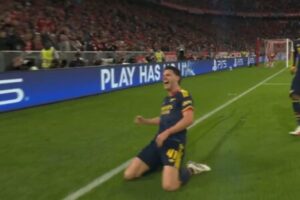
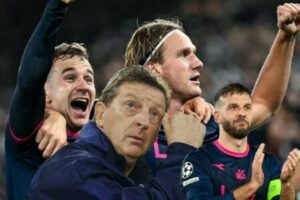
The attraction is understandable. Pierre Sage guided Lens to a remarkable second-place finish in Ligue 1, secured Champions League qualification, and delivered the Coupe de France, the first in the club’s history. In football terms, that is the equivalent of showing up for a job interview with three promotions already listed on your résumé. Palace believe the Palace Project could benefit from the same tactical intelligence and high-energy approach that elevated Lens into title challengers.
Lens Face Losing Pierre Sage Following Palace Interest
The wider context makes the Pierre Sage situation even more fascinating. Crystal Palace are searching for a successor to Oliver Glasner, who departs after overseeing the most successful era in the club’s history. Replacing a manager who delivered major trophies is never easy, but Sage’s recent achievements have convinced many observers that he possesses the credentials required for such a demanding assignment.
Additional reports indicate Palace initially explored alternative candidates before focusing heavily on Sage. Meanwhile, supporters online have reacted with considerable enthusiasm, viewing his tactical philosophy as a natural continuation of the aggressive and entertaining football they have recently enjoyed. Lens supporters, by contrast, have largely expressed disappointment that a coach who helped engineer a historic campaign could depart after only one season. The contrast perfectly captures football’s emotional economy: one club’s exciting beginning is another club’s painful ending.
As matters stand, the Pierre Sage appears to be moving steadily toward its conclusion. The Palace Project may soon gain one of Europe’s fastest-rising coaches, while Lens face the difficult challenge of replacing a manager who transformed expectations in record time. Whether this move becomes a masterstroke or merely another chapter in football’s endless carousel of ambition remains to be seen, but one thing is certain: when a coach wins trophies and immediately becomes transfer news, football’s scriptwriters are clearly enjoying themselves.